Event location
Seminars will take place at Seminar Room 218, FHH (Frederik Holsts hus), 12:15-14:00.
Zoom link for those wishing to attend online
Abstract
Christian Gottfried Ehrenberg (1795-1876) researched living and fossil microbes (infusoria) from air, sediment or food samples. His discovery around 1840 that infusoria from the Berlin underground would damage buildings caused an early public microbe scare. In the context of the cholera epidemic of 1848, Ehrenberg devoted his attention to blood-red discoloration of food, which he identified as an innocuous red microbe. Both cases allow to understand the goal of this natural history of microbes: following up on Alexander von Humboldt, he aimed at a full picture of microbes’ place in nature, such as for geological and biological processes, including humans. In a period of political instability, Ehrenberg’s investigations were more than an early chapter in the historiography of microbiology. His conservative-reformist perspective on materialism, religion and the state sheds new light on the relationship of science and politics around 1848. Not least, Ehrenberg’s mid-19thcentury argument about the omnipresence and big impact of microscopic life resonates with contemporary debates about microbes’ planetary agency.
Bio
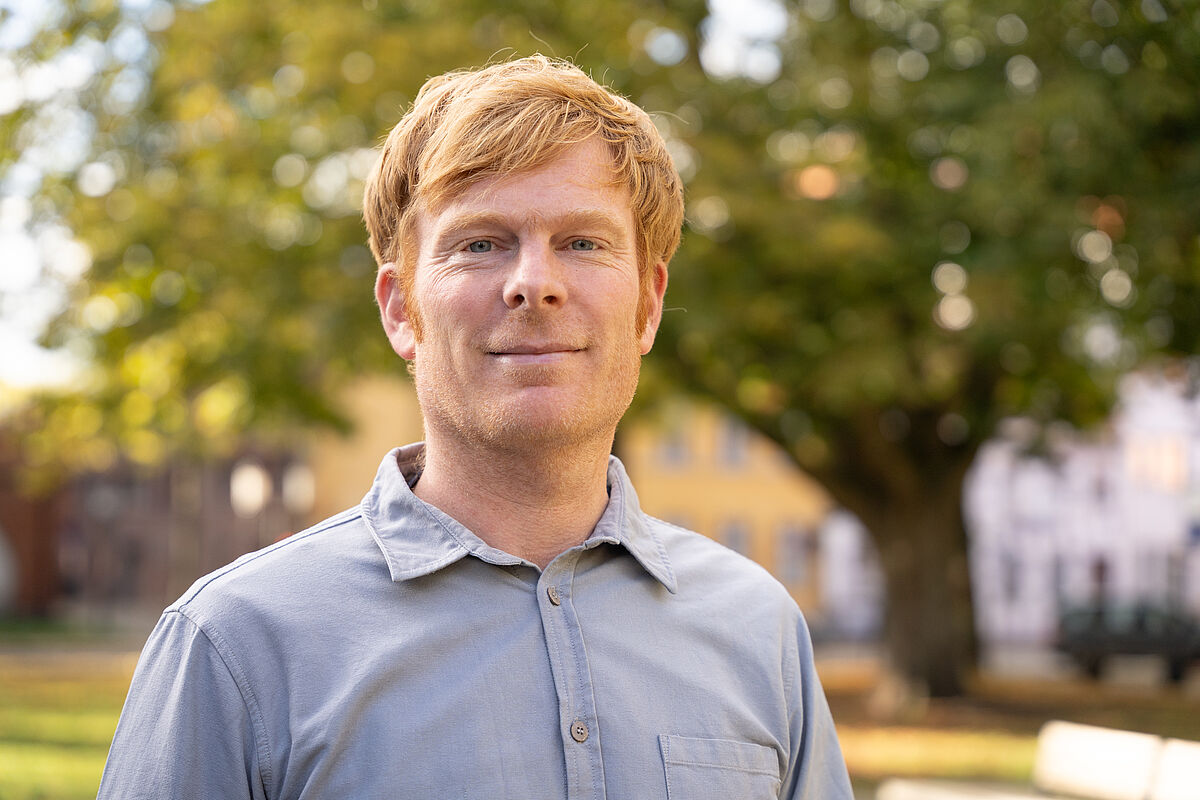
Mathias Grote studied philosophy and biology at Humboldt University of Berlin. After completing his doctorate in microbiology at the laboratory bench, he switched to history of science. His fields of interest are the history and philosophy of the life sciences as well as books and media in the sciences. After stints at the MPI for the History of Science and in Exeter, Paris and Princeton, he completed his habilitation at the Institute of History at Humboldt. Since 2023 he is Heisenberg Professor for the History of Knowledge at the Institute of History at the University of Greifswald.