The U.S. colonial project in the Philippines that lasted from 1898 to 1946 imagined its colonized subjects as children in need of “benevolent assimilation.” The dominant colonial discourse, thus, perpetuated the idea that Filipinas and Filipinos under U.S. tutelage would gradually grow into the maturity required for self-government. This is the context in which anthropologists from U.S. universities set out to collect ethnographic knowledge about the Philippines and its population. In my presentation, I will discuss the following questions: How did these anthropologists conduct methodologies and what epistemologies did they create? And how did these methodologies/epistemologies contribute to the colonial project?
Biographical Information: Christa Wirth
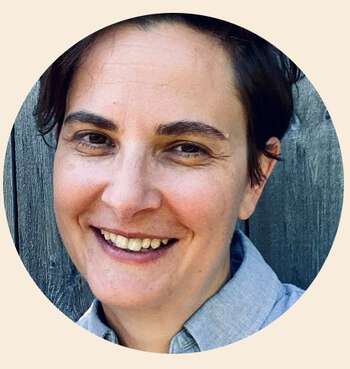
Christa Wirth is a professor in history (1750-today) at the University of Agder (UiA), Norway. Her research interests entail the history of Empire, the cold war, decolonization, migration, and transnational U.S. history. Wirth’s book Memories of Belonging: Descendants of Italian Migrants to the United States, 1884-Present was published by Brill in 2015. In 2021, ‘The Anthropologist as Deviant Modernizer: Felipe Landa Jocano's Journey through the Cold War, the Social Sciences, Decolonization, and Nation Building in the Philippines’, was published in Mark Solovey and Christian Dayé (eds), Cold War Social Science: Transnational Entanglements, Palgrave. An anthology with the title (Post)Colonial Norway: Interdisciplinary Studies on Norway’s Entanglement with Colonialism and its Aftermath, that Wirth edited together with Monica Grini is coming out in October with Scandinavian University Press.
Her academic biography includes appointments which have taken her from academic assistant at the University of Zurich where she earned her Ph.D. in history, to Harvard University, the German Historical Institute in Washington DC, and Konstanz.