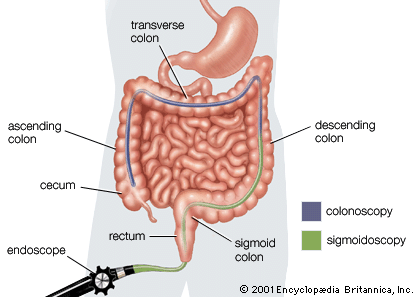
In The Lancet Gastroenterology & Hepatology 19. July 2024, Kate Wooldrage and colleagues present new findings on the long-term effects of sigmoidoscopy on colorectal cancer incidence and mortality. Among participants recruited, 170 432 were randomly assigned to undergo sigmoidoscopy screening (intervention group), or no screening (control group). After 21 years, the risk of developing colorectal cancer was 4.2 percent in the control group, versus 3.2 percent in the intervention group, a relative reduction of 24 percent. The mortality was similarly reduced from 1.3 percent in the control group, to 1 percent in the intervention group, a relative reduction of 25 percent. Wooldrage and colleagues notes that these new findings provide important data to inform colorectal cancer screening guidelines.
Relatives and absolutes
In a linked editorial in the same issue, prof. Michael Bretthauer and assoc. prof. Nastazja Pilonis, both at The University of Oslo, discuss the findings and their value when planning future screening programs. The authors express the importance of reviewing absolute risk data when screening programs are planned, as well as taking into account gender differences, effectiveness, benefits and harms, cancer location and new insights on the biology of colorectal cancer development.
The new findings, and the linked editorial, may serve as an important knowledge base for decisions in the design of future sceening programs.
Read the paper and the editorial in The Lancet Gastroenterology & Hepatology