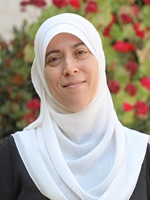
Click here to stream the public defence
Due to copyright issues, an electronic copy of the thesis must be ordered from the faculty. For the faculty to have time to process the order, the order must be received by the faculty at the latest 2 days before the public defence. Orders received later than 2 days before the defence will not be processed. After the public defence, please address any inquiries regarding the thesis to the candidate.
Trial Lecture – time and place
See Trial Lecture.
Adjudication committee
- First opponent: Professor Lenka Benova, Institute of Tropical Medicine, Belgium
- Second opponent: Professor Astrid Blystad, University of Bergen, Norway
- Third member and chair of the evaluation committee: Professor Jahn Frederik Frøen, University of Oslo
Chair of the Defence
Professor Kari Nyheim Solbrække, University of Oslo
Principal Supervisor
Professor Heidi E. Fjeld, University of Oslo
Summary
Menarche is a main milestone for adolescent girls, marking the onset of puberty and, in many societies, introducing them to new social roles as young women. Available evidence has shown that adolescent girls often enter menarche without being adequately prepared or educated. This can negatively affect their menstrual experience as well as their future health and well-being.
The aim of this PhD study is to explore the menstrual experience and health of adolescent girls living in Palestine Refugee Camps in the West Bank (internally displaced) and Jordan (externally displaced). This includes understanding menstrual preparedness, describing menstrual patterns, measuring the prevalence of dysmenorrhea and its effect on well-being and academic performance, and ultimately providing feasible policy and research recommendations.
A sequential exploratory mixed methods (SEMM) study was conducted to achieve the research objectives. The study started with qualitative in-depth interviews and focus group discussions, followed by a quantitative household survey. Both phases were guided by a socio-ecological framework.
The results showed inadequate menstrual preparation for adolescent girls living in Palestine Refugee Camps in both countries. The preparation was not timely, focusing on practical aspects, mainly relying on mothers, and often hindered by cultural norms and values.
Furthermore, alarmingly high levels of dysmenorrhea, reaching up to 96%, were reported. The mean dysmenorrhea score varied by different population characteristics and negatively affected participating girls' well-being and academic performance.
These findings highlight the need for a comprehensive and coordinated approach to address menstrual health. Effective solutions require inter-sectoral collaboration among schools, healthcare providers, community organizations, and families to ensure adolescent girls can manage their menstrual health with dignity and free from stigma.
Additional information
Contact the research support staff.