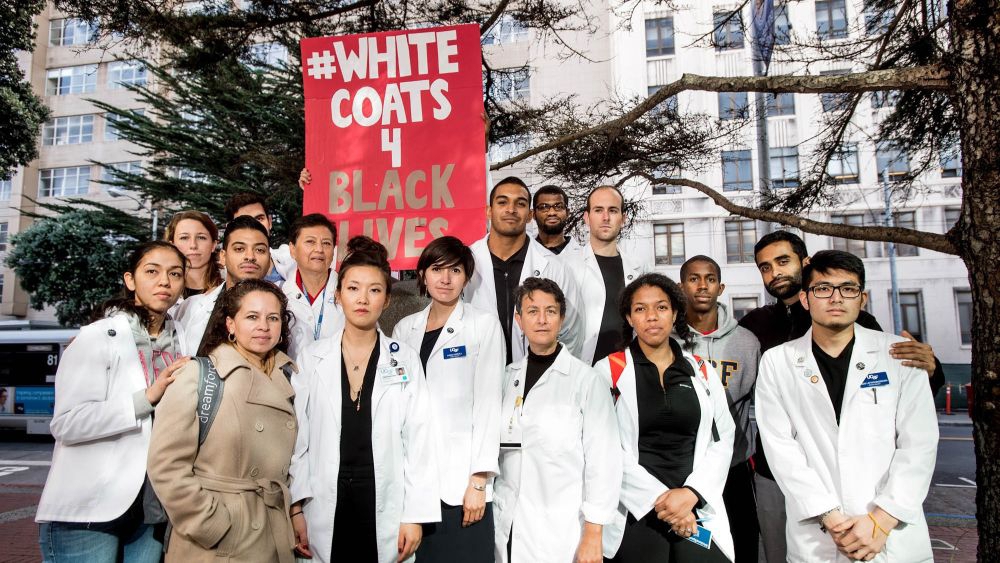
Program
*The seminar starts at 4 PM, but there will be served pizza for students from 3:30 PM.
16:00-16:05: Welcome by Vice-Rector for life science and health research Jens Petter Berg
16:05-16:50: Seth Holmes: "How medical trainees learn to legitimize social inequality and what to do about it"
16:55-18:00: Roundtable discussion with Seth Holmes, Oline Fjordbo, Mohammed Almashadani, chaired by Dagne Omland
Abstract:
How do medical students and future clinicians learn to see (or not see) the social forces shaping their patient’s health? Based on several years of ethnographic research, interviews and personal experience in medical training, this talk explores the ways in which medical trainees learn to perceive and respond to social inequalities in everyday clinical practice. The narrow biomedical gaze remains essential for diagnosing and treating disease, yet on its own it often fails to address many of today’s most urgent health challenges. Social inequities, including poverty, racism, insecure housing, migration status, gender, disability, and unequal access to care, shape health outcomes more profoundly than genes or other individual bodily characteristics alone. The talk explores how unequal health outcomes can come to appear normal, inevitable or deserved, and how a narrowly clinical gaze may unintentionally objectify patients while obscuring these social inequities. At the same time, the talk emphasizes moments in which students and trainees question these assumptions, organize collectively and develop more socially responsive forms of medical practice.
The talk will be in conversation with social health movements, and consider what it means to train not only biomedically competent clinicians, but clinicians able to recognize and challenge the social conditions that produce illness. While rooted in research from the United States, these questions are urgent across national contexts, including Norway. Relevant to medical students, educators, clinicians, and students of the social sciences, this lecture invites participants to consider how professional training shapes moral and political understandings of care, and what each of us can do to move from a limited clinical gaze toward a more equitable, critical, and liberatory medicine.
Bio:
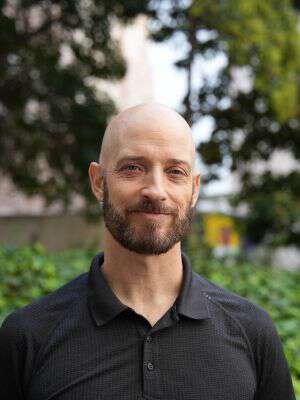
Seth M. Holmes has an M.D. from the UC San Francisco School of Medicine and a Ph.D. in Medical Anthropology from UC Berkeley and UC San Francisco. A cultural and medical anthropologist and physician, he has worked on social hierarchies, health inequities, and the ways in which such asymmetries are naturalized, normalized, and resisted in the contexts of transnational im/migration, agro-food systems, and health care. He co-directs the MD/PhD Track in Medical Anthropology between UC Berkeley and UC San Francisco, founded and co-chairs the Berkeley Center for Social Medicine, and founded and directs the Hub for Global Social Medicine in Barcelona. He has conducted participatory research with Indigenous Mexican migrant farmworkers and their families - including producing a short documentary film directed by youth in the families - and currently leads an ERC project based at the University of Barcelona, FOODCIRCUITS: Hidden Connections Between Migrants and Societies. In addition, he leads the monthly series, "Cases in Global Social Medicine", in The Lancet, in the process collaborating with health professionals in the Sahrawi refugee camps in Algeria. He has received scientific awards from the fields of anthropology, sociology, and geography, including the Margaret Mead Award. His book, Fresh Fruit, Broken Bodies, has received multiple awards, been translated into several languages, and published as an audio book. In addition to scholarly articles, he has written for popular media such as The Guardian, El Pais, The Huffington Post, The Hill, and The Conversation and spoken on multiple NPR, PRI, Pacifica Radio and Radio Bilingüe radio programs.
About Per Fugelli (1943- 2017)
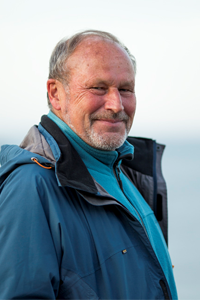
Per Fugelli, a general practitioner and professor of Social Medicine at UiO's Institute of Health and Society from 1992 to 2013, ascended to prominence as a leading public intellectual in Norway during this period. His methodology bridged clinical medicine with a deep consideration of structural dynamics and social equity. Critiquing the mechanistic and narrow aspects of contemporary biomedicine, Fugelli championed a holistic perspective anchored in social justice that prioritized the welfare of marginalized communities. Embracing a broad view that encompassed individuals, populations and ecosystems, his work underscored the interconnectedness of health, the environment and society
Through countless lectures and fearless participation in a large number of important debates, he was a prominent contributor to Norway's public space fora for a long time. He was awarded The Freedom of Expression Prize 2013.
Obituary by Barbara Casassus in The Lancet.
The Patient Earth
The forum inspired students and researchers at the Faculty of Medicine to focus on global health. The topic of this seminar is based on an article from 1993: In search of a global social medicine. After publishing the article, Fugelli and a group of students established a forum called "The patient earth". The forum inspired students and researchers at the Faculty of Medicine to focus on global health.
"In each new generation of doctors, ..... this branch of medicine attracts not only analytical minds, but also people who feel a strong vocation to improve health in society by attacking plain injustice. They are impatient with the distant attitude of science." Jan P. Vandenbroucke.