Norwegian version of this page

Eivind Hennestad

Researcher - Neural Systems
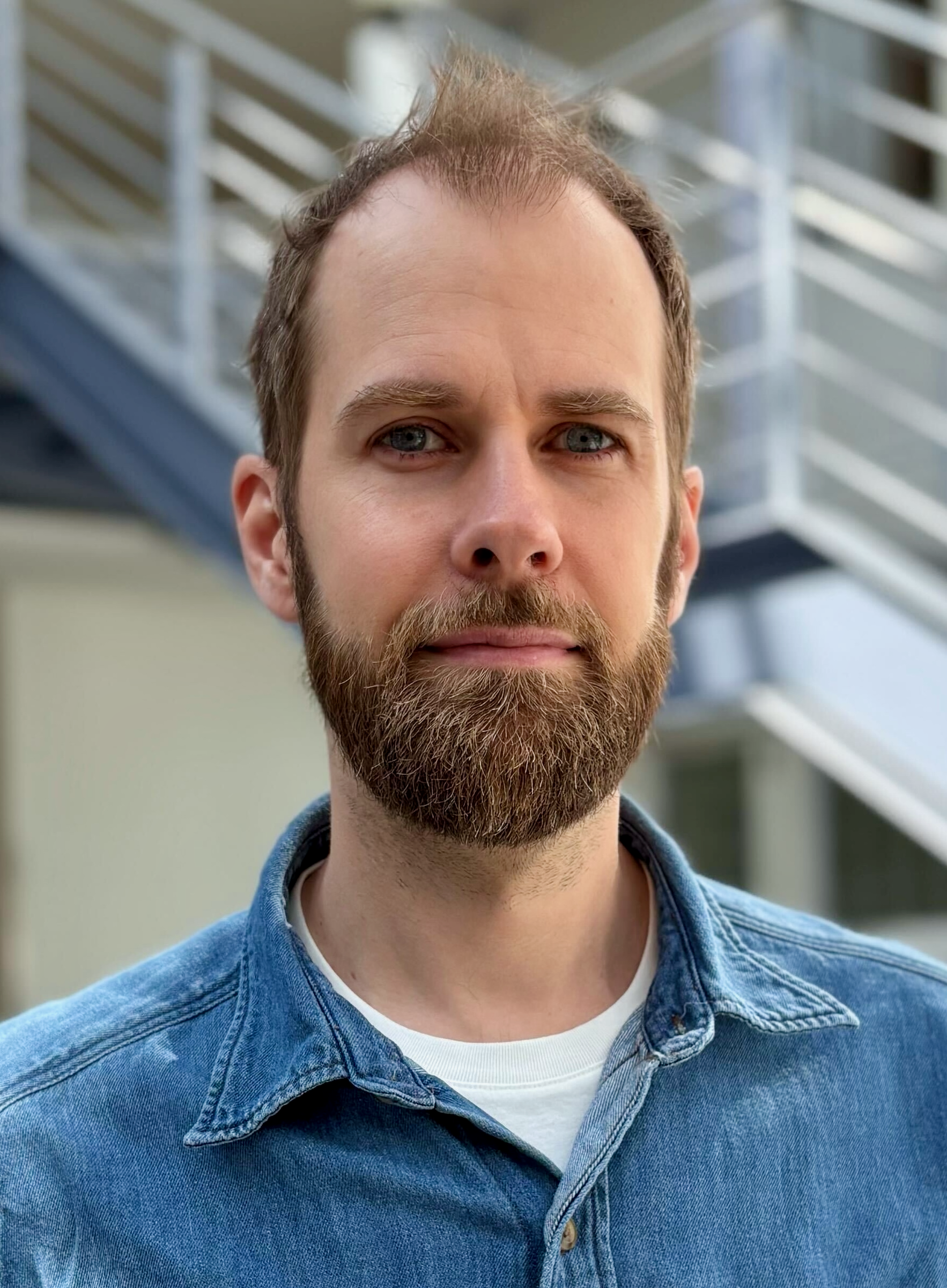
Image of Eivind Hennestad
Room L-164
Username
Visiting address Sognsvannsveien 9 Domus Medica 0372 Oslo
Postal address Postboks 1105 Blindern 0317 Oslo

About me

I am a researcher in the Neural Systems group working on software for the standardization of neuroscience data. My goal is to make it easier for researchers to work with their data — so they can spend more time doing science and less time writing custom code.

I currently work on the SHAREbrain workflow, which helps researchers standardize data for sharing via EBRAINS by collecting metadata in openMINDS and converting data to NWB. I also maintain openMINDS_MATLAB and previously developed NANSEN, a data management platform for neuroscience labs.

Academic interests

  • Research data standardization (NWB, openMINDS, FAIR data)
  • Research software engineering and scientific user interfaces
  • Data management, processing, and analysis tools for neuroscience

Background

Before joining the Neural Systems group in 2022, I was a PhD candidate in Koen Vervaeke's Group for Neural Computation (2015–2022), working on two-photon imaging of vestibular and visual processing in the retrosplenial cortex and connected regions.

Education

M.Sc., Norwegian University of Life Sciences (NMBU), Ås, 2014 — specialization in computational neuroscience

Tags: FAIR, Neuroscience, Data standardisation

Publications

  • Gianatti, Michele; Garvert, Anna Christina; Lenkey, Nora Melinda; Ebbesen, Nora Cecilie; Hennestad, Eivind & Vervaeke, Koen Gerard Alois (2023). Multiple long-range projections convey position information to the agranular retrosplenial cortex. Cell reports. 42(9). doi: 10.1016/j.celrep.2023.113109. Full text in Research Archive
  • Bjørnstad, Daniel Marelius; Åbjørsbråten, Knut Sindre; Hennestad, Eivind; Cunen, Celine; Hermansen, Gudmund Horn & Bojarskaite, Laura [Show all 9 contributors for this article] (2021). Begonia - a two-photon imaging analysis pipeline for astrocytic Ca2+ signals. Frontiers in Cellular Neuroscience. 15. doi: 10.3389/fncel.2021.681066. Full text in Research Archive
  • Hennestad, Eivind; Witoelar, Aree Widya; Chambers, Anna Ruth & Vervaeke, Koen Gerard Alois (2021). Mapping vestibular and visual contributions to angular head velocity tuning in the cortex. Cell reports. 37(12). doi: 10.1016/j.celrep.2021.110134. Full text in Research Archive
  • Morland, Cecilie; Andersson, Krister; Haugen, Øyvind Pernell; Hadzic, Alena; Kleppa, Liv & Gille, Andreas [Show all 21 contributors for this article] (2017). Exercise induces cerebral VEGF and angiogenesis via the lactate receptor HCAR1. Nature Communications. 8. doi: 10.1038/ncomms15557. Full text in Research Archive

View all works in NVA

  • Benediktsdottir, Signy; Golla, Archana; Blixhavn, Camilla Hagen; Hennestad, Eivind; Kleven, Heidi & Najafi, Peyman [Show all 16 contributors for this article] (2024). Towards FAIR neuroscience: an efficient workflow for sharing and integrating data. Full text in Research Archive
  • Pieschnik, Sophia; Golla, Archana; Reiten, Ingrid; Schlegel, Ulrike; Hennestad, Eivind & Hübenette, Saira Jameela [Show all 20 contributors for this article] (2023). Pioneering open neuroscience - the role of the curation services. Full text in Research Archive
  • Andersson, Krister; Morland, Cecilie; Haugen, Øyvind Pernell; Hadzic, Alena; Kleppa, Liv & Gille, Andreas [Show all 21 contributors for this article] (2017). Exercise benefits brain through the lactate receptor HCAR1, increasing VEGF and capillary density in hippocampus and cortex. Full text in Research Archive
  • Morland, Cecilie; Andersson, Krister; Haugen, Øyvind Pernell; Hadzic, Alena; Kleppa, Liv & Gille, Andreas [Show all 18 contributors for this article] (2016). A novel mechanism for cerebral angiogenesis via lactate receptor HCAR1 at pial vessels. Full text in Research Archive
  • Morland, Cecilie; Andersson, Krister; Haugen, Øyvind Pernell; Hadzic, Alena; Kleppa, Liv & Gille, Andreas [Show all 18 contributors for this article] (2016). Exercise induces cerebral angiogenesis via lactate receptor HCAR1 at pial vessels. Full text in Research Archive

View all works in NVA

Published Apr. 28, 2026 10:45 AM - Last modified May 7, 2026 6:13 PM