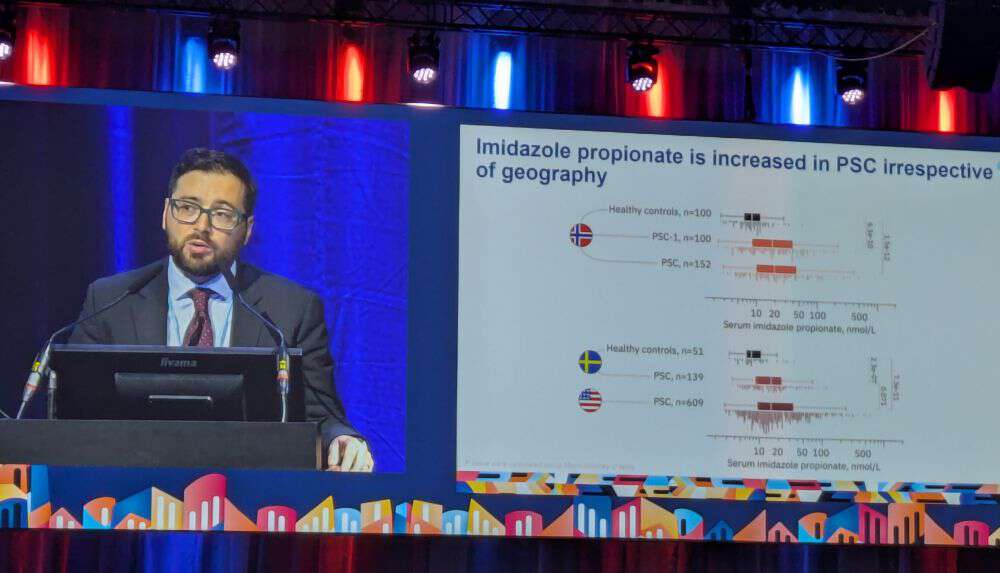
The four-day event was also available online. A large delegation from NoPSC contributed with the following presentations;
• Antonio Molinaro presented at the first general session: “The microbe-derived metabolite imidazole propionate promotes the pathogenesis of primary sclerosing cholangitis via p38 mTORC1 signaling”. Antonio was first author together with Peder Braadland, and Johannes Hov last author.
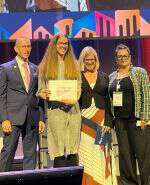
• At the Immune mediated disease I session, Holmfridur Helgadottir presented; “Development of a multi-biomarker model to predict transplant free survival in primary sclerosing cholangitis: a multicenter retrospective study. Holmfridur was first author together with Peder Braadland, Mette Vesterhus last author. Holmfridur received an award for best abstract from PSC-Partners for this presentation.
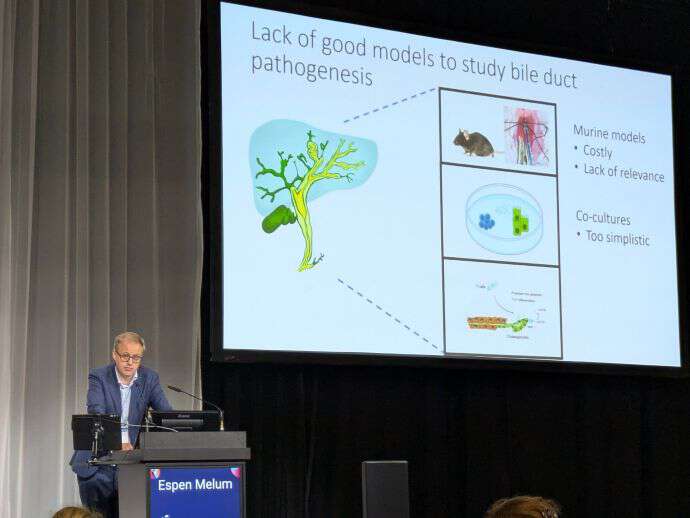
• Espen Melum held a lecture in the symposium "Liver immunology - Towards novel immunotherapies”, entitled “Applying cholangiocyte organoid and bile-duct-on-a-chip to study pathogenesis and target inflammatory pathways in PSC”
Johannes Hov chaired the EASL IPSCSG Do’s and don’ts in PSC session.
NoPSC participated with three posters with presentations;
• Sara Tjønnfjord presented her work: "Indoles are colon-dependent circulating microbial metabolites associated with prognosis in primary sclerosing cholangitis».
• Hege Marie Vedeld presented research she had done together with Sigurd Breder: "Accurate detection of cholangiocarcinoma in primary sclerosing cholangitis by DNA methylation biomarkers in bile and plasma" in the: Liver tumor session.
• Usha Tharmathas presented her work; "PRO-C3 shows prognostic and trial-endpoint potential in primary sclerosing cholangitis" in the Immune-mediated and Cholestatic session.
And an additional three posters;
• Henry Hoyle; “Using an in vitro bile duct on a chip to study the mechanisms and treatment of biliary atresia”
• Sarah Peisl; “Modelling biliary epithelial responses to microbial signals using a bile duct on a chip platform”
• Jeremy Yeoh; “Developing advanced 3D models of cholangiocyte-immune crosstalk
EASL had a studio on the Lancet commission, where Tom Hemming Karlsen contributed. And the International PSC Study Group had a meeting at EASL where many from NoPSC participated.
The program also included social events like the common NoPSC dinner.
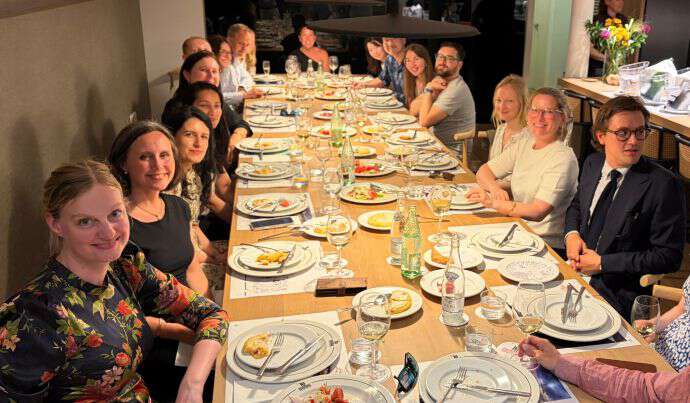
Overall, the participants left inspired and invigorated about their research. “It is always very motivating attending EASL, meeting so many enthusiastic people that want to talk about research and are interested in your research as well. I always come back home inspired and boosted” Petra Hanzely says.
Henry Hoyle also chimes in and says “It was great to attend EASL this year and see a range of interesting talks and connect in person with collaborators from around the world. Hopefully we will also see some exciting new collaborations coming out of the conference.”