
- Yes, this is actually an impressive success story that will have future percussions, replies his host at Scientia Fellows, Professor Stefan Krauss.
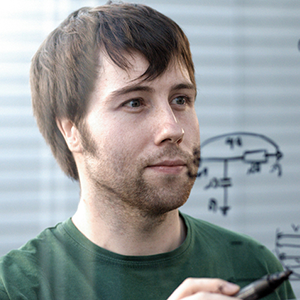
When postdoctoral fellow Mathias Busek and Professor Stefan Krauss found each other through the EU co-funded Scientia Fellows programme a dream team was built. Now an international startup is emerging thanks to the Scientia Fellows programme and further help and advice by the UiO Growth House and SPARK Norway, which are aiding innovations at the University of Oslo.
Lasting from 2019, the Scientia Fellows II-programme is soon coming to an end and fellowships are ending. To give an impression of how such programs work, Stefan and Mathias share some of their experiences as host and fellow in the program.
- I found the perfect topic and a cutting-edge research group
- I found out about Scientia Fellows through a job offer on the European Organ-on-Chip Society website, says Mathias. He chose Scientia Fellows because the topic, Organ-on-Chip (OoC), was in his scope and the fellowship gave him the opportunity to develop a new OoC platform from the scratch for real use-cases in an international and the cutting-edge research group at the Hybrid Technology Hub (HTH).
A prestigious program that attracts excellent postdoctoral researchers
- The Scientia Fellows program allowed to attract excellent PDs to the HTH-CoE at the stage where international top competence was necessary to build up novel activity in Norway, says program host and Centre Director at HTH Professor Stefan Krauss.
- The program is very prestigious, Mathias says. – Also, most postdoc-programs are very much linked to a determined project. In the Scientia program, you can develop your own research project and have more freedom to develop your scientific career.
The Organ on a Chip-Technology
The goal of the cross-disciplinary international Hybrid Technology Hub - Centre for Organ on a Chip-Technology, is to develop an open source “organ on a chip” platform that reproduces core functionalities of the human body and allows real time data acquisition upon exposure to therapeutic reagents. A current focus is on energy metabolism regulating organs.
- Together with my colleagues, we developed a novel user-friendly pumpless revolving Organ-on-Chip platform – termed rOoC - platform for animal-free drug testing and personalized medicine. This novel technology has now led to several publications, a patent, several successful follow-up projects and international collaborations, explains Mathias.
Networking skills and outreach activities
The Scientia Fellows programme include a variety of courses and activities related to both the professional and social life of fellows.
– Courses offered in the Postdoc program as well as the monthly pitching sessions and the two annual conferences improved my networking skills, Mathias says. - Furthermore, I was engaged in the Scientia Podcast together with other fellows and we interviewed several international guests which was a great opportunity for disseminating science to a broader audience.
- I think the courses on career development and supervision that I attended as part of the Postdoctoral programme and the various outreach activities I was involved in with the Scientia Fellows programme will help my career.
Adapting to life in another country
I was moving with two kids and my wife, so the fact that Norway is very child friendly was important to us when we decided to move here, Mathias says. - Oslo is a nice city with beautiful surroundings, culture offers and the spirit of a European capital without being too big.
- Having my family here and the warm atmosphere with my colleagues at HTH and from the Scientia program has been important to me. We organized regular meetups after work, travelled together for retreats and conferences and had a great time together.
From fellowship to startup company
The HTH-research group are now drafting the startup, CellSpace AS, that will be implemented in spring 2025. This startup is planned as an international startup, which also involves a leading lab in Tubingen, Germany.
- The Scientia Fellows programme taught me about innovation through the “School of Health Innovation” courses offered at UiO, the SPARK Norway program in which we had been enrolled with CellSpace AS and the meetings organized by the UiO Growth House, says Mathias.
- From the start on the plan was to advance technologies to a stage where it has the potential to build the fundament for startup(s), says Stefan. - This worked spot-on with Mathias.
- Our startup strategy, in addition to a strong academic track record, contribute to creating a fundament for people with unique competence to further develop their career in Norway instead of leaving after the end of the Scientia Fellows period.
Future plans
- I was lucky to develop a novel technology, so I have a good basis to secure further research grants or commercialize the technology through CellSpace AS. My next step now is to develop the company and apply for funding from the Research Council of Norway to start my own research group in Oslo, Mathias says.
Read more
- The HTH Centre for Organ on a Chip-Technology
- The UiO Growth House
The innovation unit for life sciences, health and technology at the University of Oslo (UiO). - SPARK Norway
UiO:Life Sciences' innovation programme for health-related life sciences at the University of Oslo (UiO).