
About the speaker
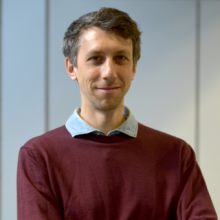 Adrien Peyrache, PhD, holds the Canadian Research Chair in Systems Neuroscience at the Montreal Neurological Institute, McGill University.
He obtained his PhD at the College de France (Paris) and did his postdoctoral training at NYU. He has made major contributions to the field of memory consolidation and spatial navigation, specifically how population of neurons are organized in relation to behaviour.
His work was recognized by several awards, including a fellowship from the Human Frontiers Science Program and a K99 award from the NIH. He is an active proponent of Open Science and he is the current chair of The Neuro – Irv and Helga Cooper Foundation Open Science Prize committee.
Abstract
Spatial navigation and memory formation are intrinsically linked. In the hippocampus, neuronal patterns mapping the animal’s trajectories during wakefulness are replayed during non-Rapid Eye Movement sleep, a phenomenon crucial for memory formation. Upstream of the hippocampus, the head-direction (HD) circuit provides a key input signal for navigation. However, its contribution to navigation and memory formation during sleep remains unclear. Here, I will present evidence suggesting that the HD system maintains its internal coherence and orientation memory in each environment for weeks. Furthermore, HD cells remain coordinated during sleep and directly influence hippocampal replay, suggesting they convey a 'virtual' HD signal to support memory replay. The thalamus appears crucial in generating this virtual signal. Lastly, I will demonstrate computational evidence that the HD signal is essential to build a cognitive map and generate replay. In summary, the HD system provides the hippocampus and associated structures with a coherent, possibly lifelong stable signal maintained across brain states, to support spatial navigation and memory formation.
About the seminar series
Once a month, NCMBM invites international guest speakers to present on topics within molecular life science and medicine.
The seminar is open to all, with no registration needed.
Tea, coffee and a simple lunch will be served at 11.30 before the seminar.