
About the speaker
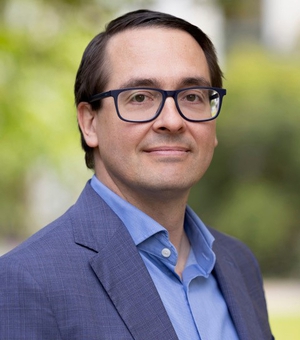 Full Professor Daniel Globisch started his independent research group in 2015 at Uppsala University as a Science For Life Laboratory Fellow. He joined the Department of Medicinal Chemistry and has been appointed as Associate Professor in 2017.
In 2020, Daniel Globisch received tenure and moved with his laboratory to the Department of Chemistry – BMC, where he has been promoted to Full Professor in 2023. He also has a guest affiliation at the Center for Translational Microbiome Research (CTMR) at Karolinska Institute since 2020.
Abstract
Metabolites produced by the gut microbiome play a crucial and diverse role in host physiology, which are detectable in a wide range of biological samples including feces, plasma, urine, and cerebrospinal fluid. Microbiota dysbiosis has been associated with the development of diseases. However, the metabolic link has yet to be detected. The detailed and targeted analysis of these metabolites is important for the discovery of biomarkers and unknown bioactive molecules.
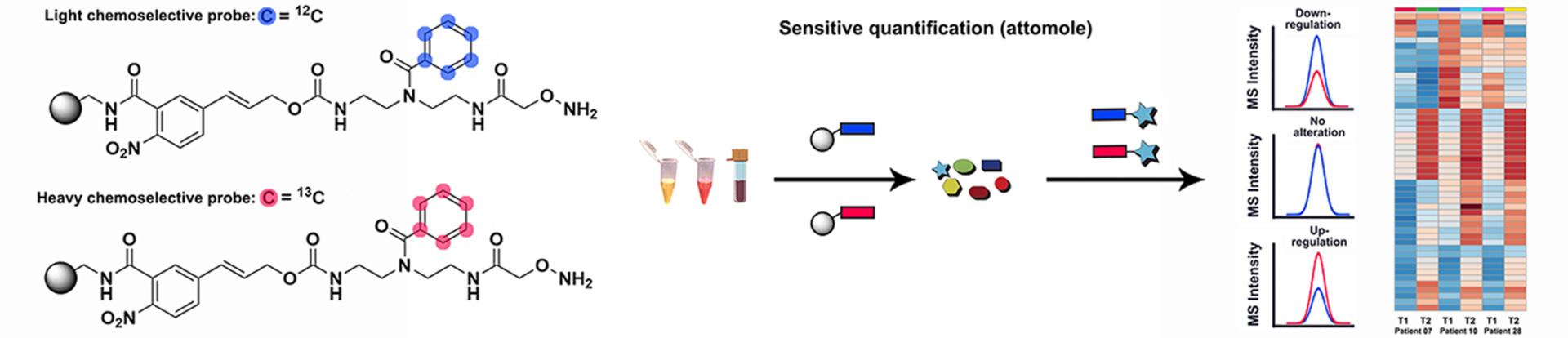
Mass spectrometric metabolomics is the method of choice for identification and quantification of these metabolites. Advanced methods at the interface of chemistry and biology, coupled with metabolomics analysis, are required but still limited. We have therefore developed a unique and multifunctional chemoselective probe with synthetic 13C/12C isotopically labelled analogues that allows for comparative and quantitative analysis of metabolites in human samples at low concentrations.1 We have termed this unique method quantitative Quantitative Sensitive CHEmoselective MetAbolomics (quant-SCHEMA). Coupled to magnetic beads, this method allows the straightforward chemoselective extraction of metabolites from human samples.[1-4] This isolation procedure of specific classes of metabolites from sample matrices led to significantly increased mass spectrometric sensitivity by sixth orders of magnitude and facilitates the detection of metabolites at attomole quantities.
Our analysis of carbonyls, thiols, amines, and short-chain fatty acids (SCFAs) revealed previously unknown metabolites. We have performed metabolic profiling in these sample types and confirmed the presence of medically relevant gut microbiota-derived metabolites in liver and pancreatic diseases. Furthermore, we applied this methodology in a dietary intervention study with 156 samples for nutritional biomarker discovery. We have successfully found four potential food biomarkers, which have not been reported before. The success of this large-scale application of this methodology results in further validation of this method and encourages its general use in metabolomics studies. We are now utilizing these methods in combination with standard metabolomics analyses in neuroscience, microbiome analysis and biomarker discovery.
We also utilized selective enzymatic treatment of metabolites in human samples for simplified identification of converted sulfated and glucuronidated metabolites to elucidate their chemical structure using mass spectrometry.[5,6] Analysis of pretreated samples using ultra-high-performance liquid chromatography-mass spectrometric techniques led to the identification of 206 sulfated metabolites, exceeding the number of sulfated metabolites in metabolomics databases by a factor of three to four. Many of these identified phase II clearance products are linked to gut microbiota-human host co-metabolism. We also identified new bioactive metabolites for the metabolic interaction of gut microbes competing with bacterial pathogens.[7]
References:
(1) W. Lin, … D. Globisch Angew. Chem. Int. Ed. 2021, 60, 23232.
(2) A. Kaur, … D. Globisch Chem. Sci. 2023, 14, 5291.
(3) W. Lin, … D. Globisch Angew. Chem. Int. Ed. 2024, 63, e202318579.
(4) W. Lin, … D. Globisch Food Chem. 2023, 425, 136481.
(5) C. Ballet, …, D. Globisch, Chem. Sci. 2018, 9, 6233–6239.
(6) A. Tsiara, …, D. Globisch Anal. Chem. 2023, 95, 12565–12571.
(7) L. Cheng, …, D. Globisch, J. Du Gut Microbes 2024, 16, 2356275.
About the seminar series
Once a month, NCMBM invites international guest speakers to present on topics within molecular life science and medicine.
The seminar is open to all, with no registration needed.
Tea, coffee and a simple lunch will be served at 11.30 before the seminar.