
About the speaker
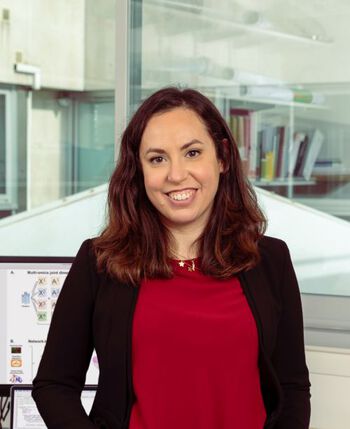
Laura Cantini is tenured researcher in CNRS, chair in the Paris Institute of AI (PRAIRIE) and G5 junior group leader heading the Machine Learning for Integrative Genomics group. Mathematician by training, Laura works at the interphase of machine learning/AI and genomics. Due to the advent of single-cell high-throughput technologies, multiple large-scale quantitative measurements, a.k.a. omics, can be accessed for the same cells. Laura’s lab focuses on the development of machine learning and AI methods able to co-analyze the numerous available single-cell omics data and translate them into actionable biological knowledge. The work of Laura Cantini has been recognized by multiple grants and awards, including the ERC StG, the Sanofi iTech award and the bronze medal of CNRS.
Abstract
Single-cell RNA sequencing has transformed modern biology by revealing the remarkable diversity that exists even within seemingly uniform cell populations. This ability to examine cells one by one has reshaped our understanding of development, immune responses, and disease mechanisms. As scRNA-seq has matured, the field has rapidly expanded toward additional single-cell measurements, ranging from chromatin accessibility to protein levels and spatial organization, each capturing a different facet of cellular identity.
Because every single-cell measurement offers only a partial view, the central challenge now is to bring these layers together to obtain a more complete picture of how cells work. Turning this growing collection of data into biological insights requires computational strategies that can jointly learn from these complementary signals.
In this talk, I will highlight three directions my team is pursuing to meet this challenge: (i) approaches to map cellular diversity by combining information from multiple single-cell omics, (ii) strategies to infer regulatory networks that help pinpoint the drivers of cell states and transitions, and (iii) methods that use spatial context to reconstruct the dynamic trajectories cells follow in tissues.
About the seminar series
Once a month, NCMBM invites international guest speakers to present on topics within molecular life science and medicine.
The seminar is open to all, with no registration needed.
Tea, coffee and a simple lunch will be served at 11.30 before the seminar.