.jpg)
About the speaker
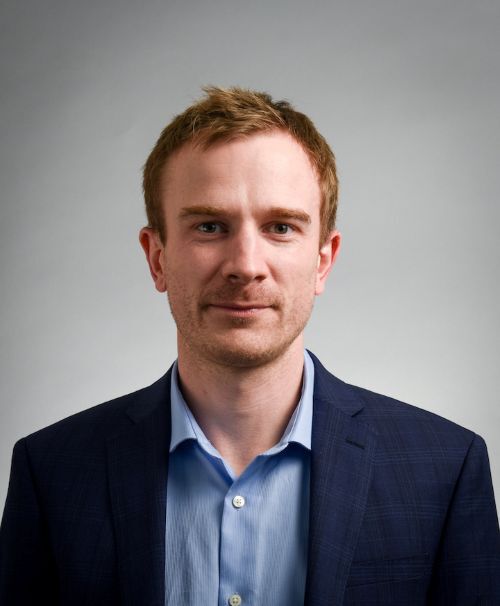
Dr Knowles studied Natural Sciences and Information Engineering at Cambridge before obtaining an MSc in Bioinformatics and Systems Biology at Imperial College London. During his PhD in the Cambridge University Machine Learning Group under Zoubin Ghahramani, he worked on variational inference and Bayesian nonparametric models for factor analysis, hierarchical clustering and network analysis.
He was then a postdoc at Stanford developing methods for functional genomics with Daphne Koller (CS), Sylvia Plevritis (Computational Systems Biology/Radiology) and Jonathan Pritchard (Genetics/Biology).
At Columbia University, he is an Associate Professor of Computer Science, an Interdisciplinary Appointee in Systems Biology and an Affiliate Member of the Data Science Institute. He is also a Core Faculty Member at the New York Genome Center. His group develops methods to better understand the genetic basis of human disease.
Abstract
Many human diseases have a substantial genetic component, which genetic association studies are increasingly capable of characterizing, empowered by ever-growing sample sizes. These associations have the potential to elucidate causal complex disease biology and prioritize therapeutic interventions. However, realizing this potential is non-trivial since most known risk variants are noncoding, making it challenging to determine the impacted genes, pathways and cellular states. I will describe strategies we have explored to address this challenge, particularly in the context of neurodegenerative disease. First, we mapped genetic effects on expression, splicing and RNA editing in over 10k postmortem brain samples, enhancing interpretation of common variant associations. Second, we developed a Mendelian randomization-based causal network inference approach to estimate how genetic effects propagate through the gene network to converge on disease risk. Third, we trained and assessed deep learning models of pre- and post-transcriptional regulation, finding they can refine functional fine-mapping, improve the portability of polygenic risk scores across ancestries, and increase power in novel annotation-aware noncoding rare variant association studies. Finally, we designed a CRISPR/Cas13-based strategy to perform isoform-specific knockdown, opening the door for functional characterization of putative disease-causal transcriptomic changes in appropriate cellular model systems.
About the seminar series
The seminar is open to all, with no registration needed.