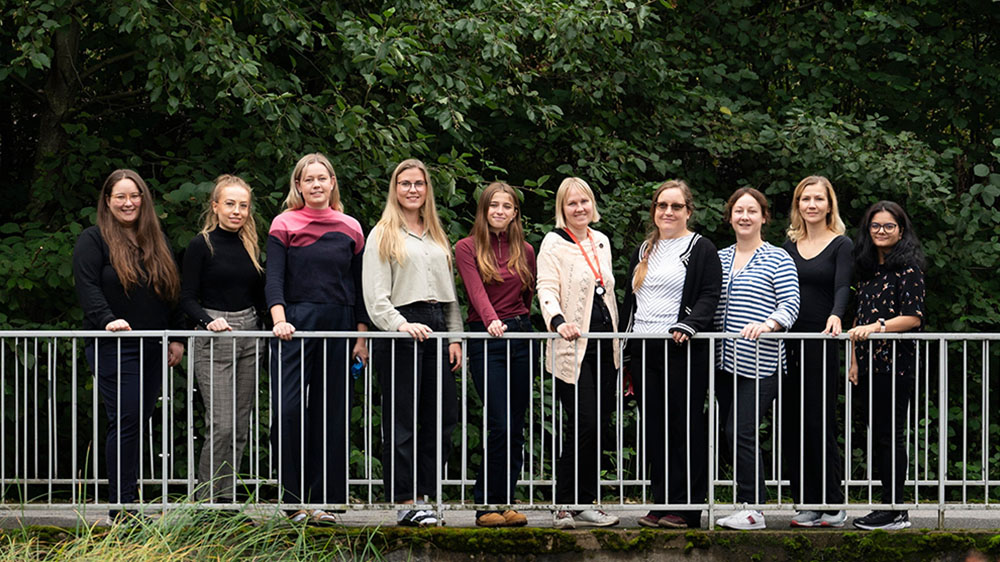
- On behalf of NCMBM and myself, I want to congratulate Emma Haapaniemi and her team on the successful evaluation, and we look forward to her research, and that of her group, on expanding their work on treatment of rare immune diseases, said Janna Saarela, Director of NCMBM, on Emma Haapaniemi’s extension.
NCMBM research group evaluation and renewal
NCMBM follows the EMBL model for group leader recruitment and review, meaning that each group is evaluated before the end of their first five-year period at the Centre. A successful evaluation means that the research group and the group leader’s appointment is extended for a further four years, allowing them to continue with their research programme at NCMBM for a total of nine years.
The evaluation of Emma Haapaniemi’s group was based on her written dossier and the letters of assessment from external scientific experts within her research field. During the SAB’s visit in March 2025, Emma met with the board to present the progress and future plans of the Better Therapies for Rare Immune Diseases group. The SAB also met with members of her research group.
Subsequently, the April NCMBM Board ratified the renewal of the group for a second period according to the recommendation by the SAB.
Expanding on the T-cell gene editing platform
To mark this achievement, we caught up with Emma to see how she envisages the next 4 years of her research program at NCMBM:
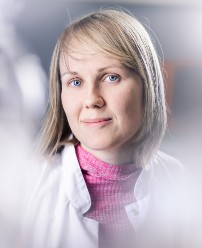
- In the next phase, our lab will focus on expanding our T-cell gene editing platform to encompass a broader range of inborn errors of immunity, ensuring that it functions effectively across a diverse spectrum of disease conditions. We will also benchmark our protocol against other correction technologies, specifically prime editing and base editing, to identify the most precise and efficient strategies for correcting diverse inborn errors of immunity. Another major research direction will be to achieve durable, safe editing of long-term repopulating hematopoietic stem cells. This is a technically challenging but potentially transformative goal for the field, and we’re excited to contribute new knowledge and tools toward making it a clinical reality.
Read more about the Haapaniemi's research group.