
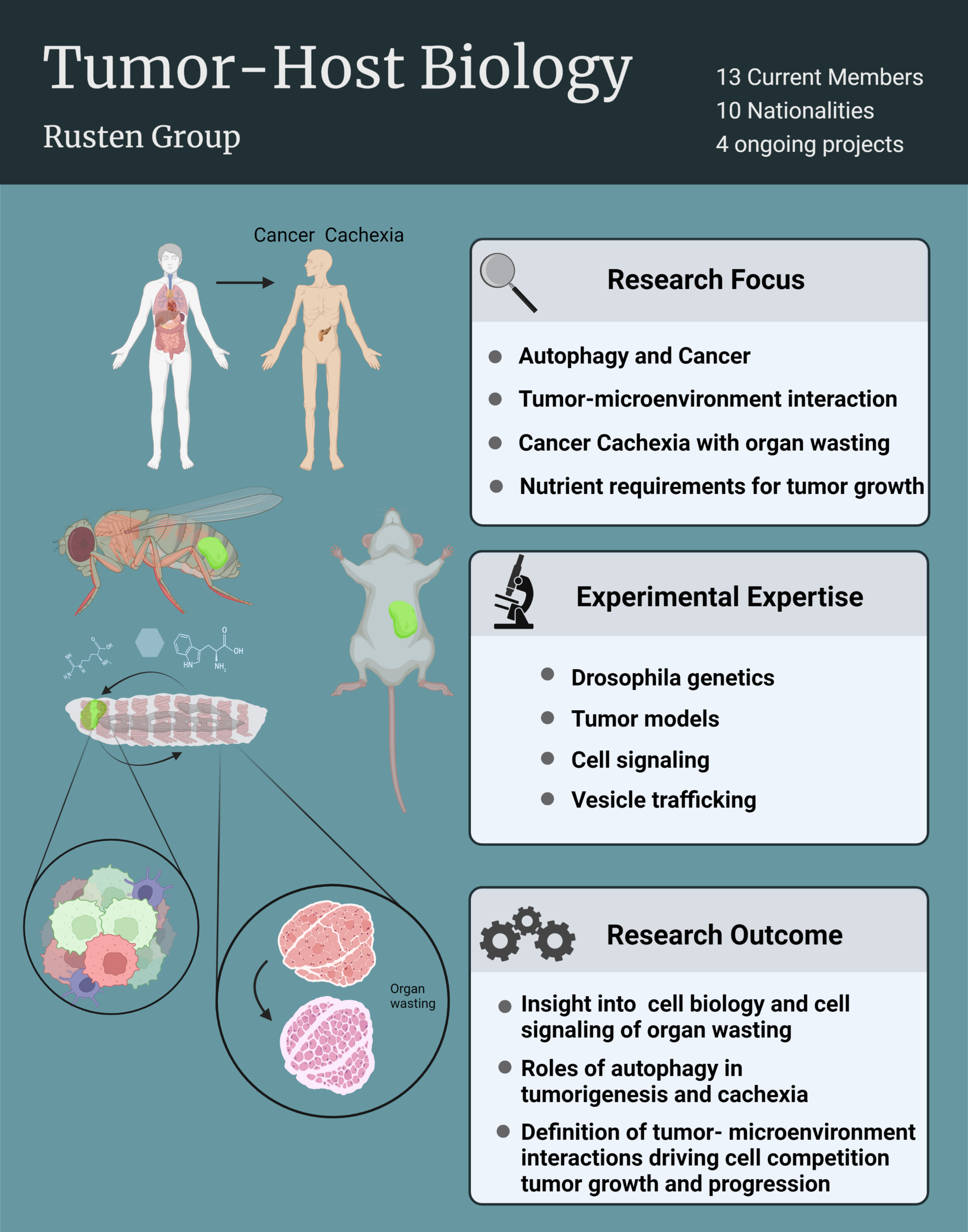
In order to mechanistically understand how tumor and non-tumor cells and organs communicate to foster tumor growth and cause cancer cachexia we develop novel genetic tools in Drosophila . We now have tools in hand to selectively and independently manipulate tumor and either tumor microenvironment or systemic organs in vivo . We employ a wide array of techniques and collaborate with experts in cell biology, genetics, imaging, tumor biology, metabolism, bioinformatics and clinical cancer cachexia in order to survey, measure and mechanistically understand these complex aspects of cancer biology. In parallel to in vivowork in flies, we utilize human organoid and spheroid cell culture to understand cellular mechanisms controlling tumor growth, such as the nutrient exchange between host and tumor, nutrient requirements for tumor growth and mechanisms of cachectic organ wasting. The group members have expertise in cell biology, genetics, molecular biology, Crispr-Cas9 screening, Drosophila , mouse and cell work.