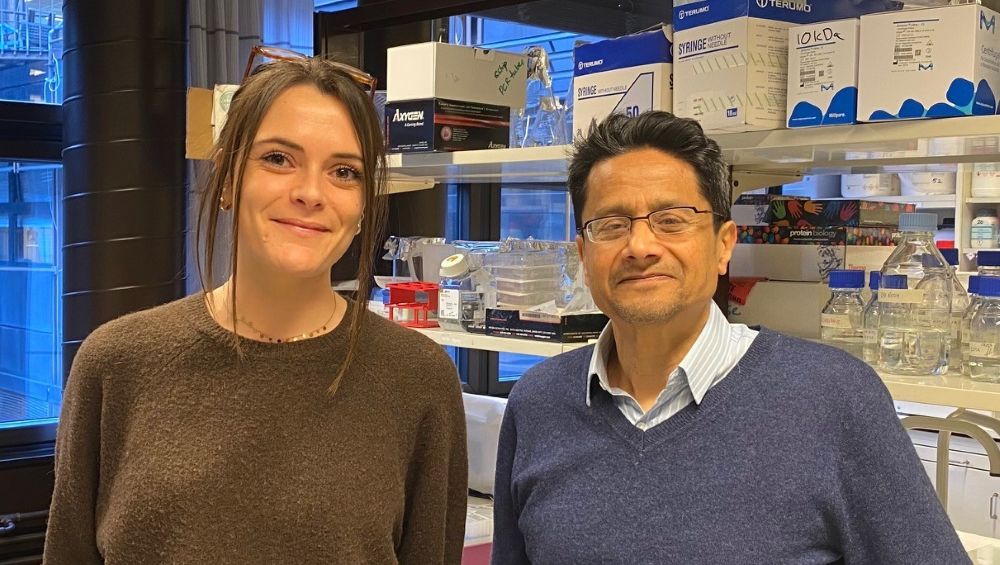
– We will study the process in the brain following a stroke - whether caused by a blood clot or brain haemorrhage - and try to understand what happens so that more effective drugs can be developed.
Aim to find the factors involved in the brain damage that occurs
Kanse points out that it is a long time since any new medicines have been developed for use after a stroke and he continues:
– We have a great deal of knowledge about strokes, but what are the factors that lead to the damage that occurs in the brain? We want to understand why a stroke releases substances from the cell nucleus that result in even more damage to the brain. The cell nucleus contains DNA and histones which in normal circumstances help to protect the DNA molecule thread.
Marie Sklodowska-Curie Actions (MSCA) Postdoctoral Fellowship gives grants lasting up to two years for promoting the mobility and career development of scientists who want to work on curiosity-driven, independent research projects in another country. Célia Sillier is French and was educated at the University of Caen.
Kanse hopes the research project will act as a springboard for Seillier’s career
– I was very positively surprised about receiving the grant. It means that I will be staying here for at least a few more years, comments a satisfied Seillier, who has a doctorate in neuroscience.
Sandip will coordinate the project and act as Seillier’s supervisor. He is very pleased about the funding and hopes that the research will bring good results and also act as a springboard for Célia’s career.
– I would like to congratulate both of them. Marie Sklodowska-Curie Actions Postdoctoral Fellowship is a great gateway to obtaining additional funding from the EU. I would urge more of our researchers to apply for this funding pathway on the MSCA programme, says the Vice Dean for Research and Innovation, Jan G. Bjaalie.