
The K.G. Jebsen Centre for Coeliac Disease Research was founded in 2016 with the aim of improving diagnostics and treatment for patients with coeliac disease.
Over the span of six years, the centre has made significant breakthroughs in understanding the mechanisms involved in the disease, and has established a dedicated centre for clinical studies on coeliac disease. Additionally, it has designed and tested various methods for more straightforward and precise diagnostics and disease monitoring.
“The support from the K.G. Jebsen Foundation has been invaluable,” Professor Ludvig M. Sollid says. He has been the centre director throughout its duration.
Research with value for patients
From its inception, the primary aim of the K.G. Jebsen Centre for Coeliac Disease Research has been to translate knowledge from basic research into practical applications that directly or indirectly benefit patients with coeliac disease.
This objective aligns with one of the core pillars of the Kristian Gerhard Jebsen Foundation's support for medical research.
"We have succeeded in this mission. Discoveries made at the centre have laid the groundwork for new methods in diagnostics and treatment, as well as advanced our understanding of the mechanisms underlying the disease," Sollid says.
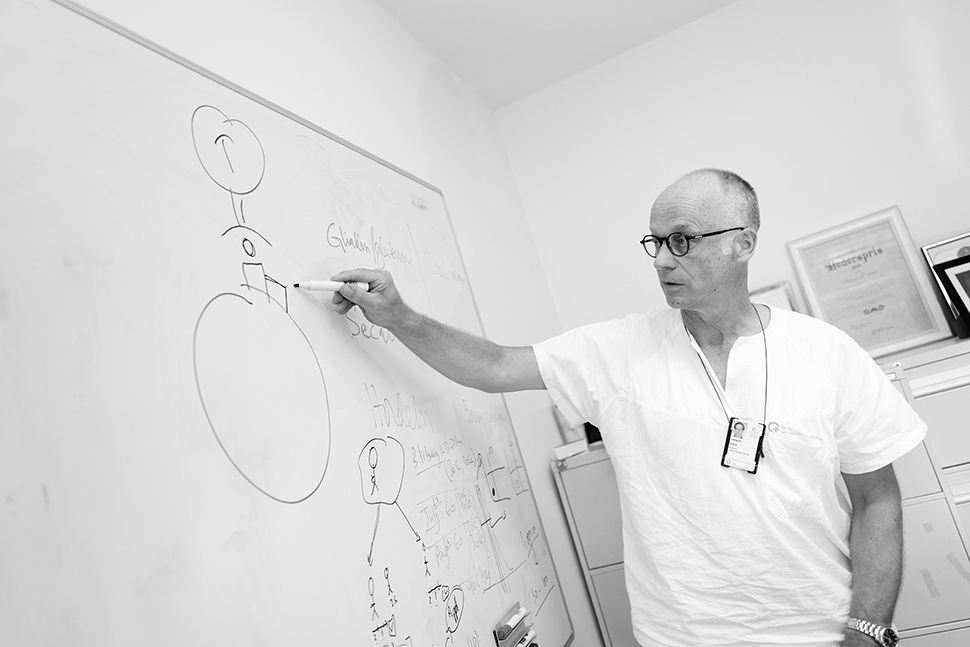
Patients at the heart of the centre's research
Patients are central to the research conducted at the centre. Coeliac disease affects one to two percent of the Norwegian population. The centre has fostered strong collaborations with patient organizations in Norway (The Norwegian Coeliac Society) and the United Kingdom (Coeliac UK).
The translational research undertaken at the centre has consistently aimed to apply discoveries made in the laboratory and preclinical studies to benefit patients directly. These findings have been instrumental in developing new diagnostic methods and conducting clinical studies involving patients.
The centre has become an active hub for conducting clinical studies, including both centre-initiated and industry-sponsored studies.
"All in all, the K.G. Jebsen Centre has established itself as a world-leading centre for translational research on coeliac disease," Sollid concludes.
Increased understanding of mechanisms behind multiple autoimmune diseases
The centre has significantly enhanced the understanding of the mechanisms behind coeliac disease and the interaction between gluten and autoimmunity.
Furthermore, they have identified clear parallels between coeliac disease and other immune-mediated diseases.
"This latter point, in particular, elevates the relevance of coeliac disease research beyond merely treating the patient group. The mechanistic understanding enables us to better comprehend other, even more severe diseases and potentially identify new targets for treatment," Sollid says.
Collaborative efforts across disciplines and institutions
The research collaboration was well-established over many years before receiving centre funding in 2016. The centre was set up to further develop research that was already at the forefront.
"Much of the centre's activity builds on curiosity-driven basic research findings over more than 30 years," Jorunn Stamnæs explains. She has been the administrative coordinator at the centre since 2018.
"During these six years as a Jebsen Centre, we have continued and strengthened the collaboration between existing environments focused on basic and clinical research," she adds.
The centre has also laid the groundwork for strong collaborations across disciplines and institutions. For instance, Professor Geir Kjetil Sandve from the Department of Informatics has served as a group leader at the centre.
"Our collaboration with him and his team has been extremely fruitful. Sandve is an expert in artificial intelligence, which has enabled the application of this method in several of the centre's projects," Sollid says.
The centre has also had international participation, notably from the research group of Professor Cisca Wijmenga at the University Medical Centre Groningen in the Netherlands. Her group is a world leader in genetics, and she has pioneered in establishing in vitro models, particularly the "organ-on-a-chip" model, to study coeliac disease.
High activity and outreach
The centre has demonstrated high activity during its operational period. Several groundbreaking articles have been published, 21 PhDs have been defended, and the centre has trained future researchers and clinicians.
Researchers at the centre are considered leaders in their fields, and centre staff are regularly invited to give talks at international conferences.
The centre has also excelled in research dissemination, including prize-winning contributions at research fairs.

Continuing the legacy with the Norwegian Coeliac Disease Research Centre
Now that the period as a Jebsen Centre is finished, the research will continue at the newly established Norwegian Coeliac Disease Research Centre.
"The aim of the new centre is to continue the robust research initiated at the Jebsen Centre. We also aim to establish a national hub for clinical, translational, and basic research on coeliac disease," Sollid says.
Contact
Read more