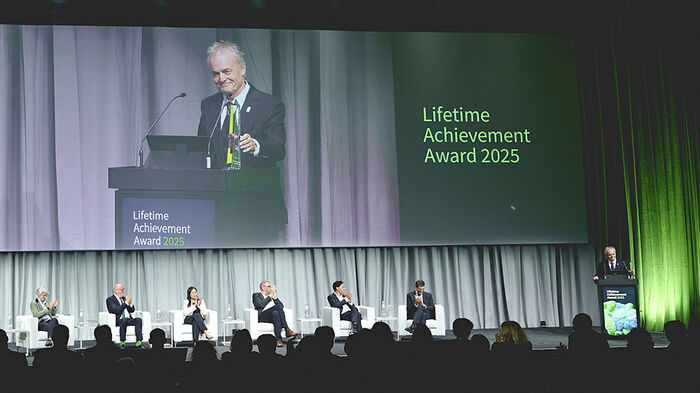
Professor Lars Aabakken has been honoured with the Lifetime Achievement Award at the United European Gastroenterology (UEG) congress for his pioneering contributions to endoscopy, international engagement and leadership in the field.
2025
The researchers are studying the role of mitophagy in cancer development and how NK cells and antibodies can be utilised in cancer treatment.
In the new convergence environment GENESIS, Professor Arne Klungland and colleagues will research the role of genes in the development of embryos. "We believe this is a unique project that will foster new collaborative environments in the Life Sciences Building," he states.
Andreassen receives the Colvin Prize for Outstanding Achievement in Mood Disorders Research for his groundbreaking research on bipolar disorder. "The award is a great recognition of our research environment, as many have contributed to the results we have achieved," the professor says.
He is awarded the Ceppellini Prize for 2025 for his outstanding contributions to the understanding of the immunological mechanisms underlying coeliac disease.
EMBO membership is awarded to outstanding researchers in molecular biology after a thorough evaluation. Klungland becomes the twelfth member from Norway.
The University of Oslo honours Grødeland for her exemplary efforts in conveying research-based knowledge about vaccines to the public. "It's important that we express exactly what we mean based on the facts we observe, and that we are not afraid to do so," says this year's winner.
"If our research one day can provide patients with a better quality of life, alleviate, or cure serious illnesses, it will be truly fantastic," says this year's recipient of one of the University of Oslo's esteemed awards.
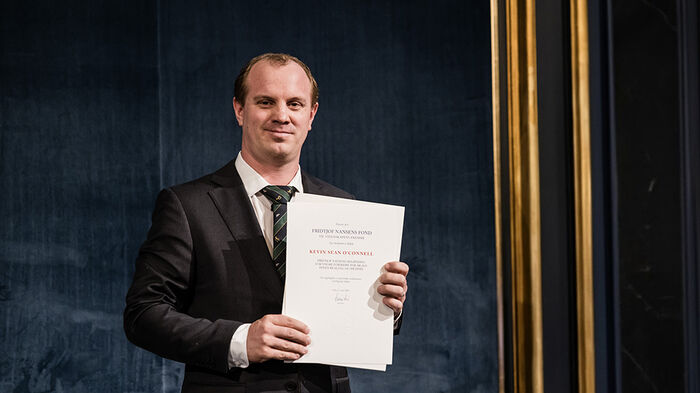
Kevin O'Connell has been honored with the prestigious award for his work on understanding the factors contributing to the development of psychiatric disorders. His research stands out for its exceptional originality and high-level scientific activity on an international scale.
The Professor has been honoured with the prestigious King Olav V's Cancer Research Prize for his groundbreaking work on how the body's own cells can detect and eliminate cancer.
The European Research Council (ERC) has awarded an ERC Consolidator Grant of 2 million Euros to Professor Johannes Espolin Roksund Hov, who aims to investigate the interaction between gut bacteria and the development of severe liver diseases.
The new EU-funded project ECOPOP is set to explore whether less invasive treatments can be as effective as traditional surgery for early-stage colorectal cancer. The project is coordinated by the University of Oslo (UiO) and led by Professor Michael Bretthauer.
Professor Jan Terje Andersen is set to investigate this question in a new innovation project funded by the Norwegian Cancer Society.
Can a molecule found in fruits and vegetables serve as a drug candidate for Alzheimer's disease? UiO researchers aim to explore this question in a project funded by the Norwegian National Association for Public Health.
Researchers at the University of Oslo have adapted a technology that is transforming the field of genetic research. The novel approach allows for the generation of model systems more precisely and rapidly than traditional methods. The approach enables rapid generation of preclinical models, for assessing novel therapies.
An international research team seeks to examine the virus-host interaction of Marburg virus (MARV) and establish a blueprint for the targeted development of antiviral strategies for newly emerging viruses. Researcher Tuula Nyman leads UiOs contribution to the new EU project.