In today's academic world, the student perspective has taken on an increasingly central role. This is particularly evident in innovative learning environments where students are actively involved as learning assistants. New technologies, a changing society, and an increased focus on sustainability mean that higher education needs to adapt and develop new approaches to ensure students think critically and ask questions.
Student-driven initiatives: Useful contributions
Seeing students engage in the design of learning materials is inspiring, and the experience of the Center for Sustainability in Healthcare Education at the University of Oslo (UiO) shows what is possible when students take active roles. Since the start of the center in 2020, students have initiated their own projects, organized events, and this spring acted as learning assistants, which has proven to be valuable both for them and for the institution.
Learning assistants are bachelor's, master's or PhD students with pedagogical and professional training, employed to support teaching at UiO. They are often part of teaching teams at their departments or faculties, where they facilitate learning activities for students.
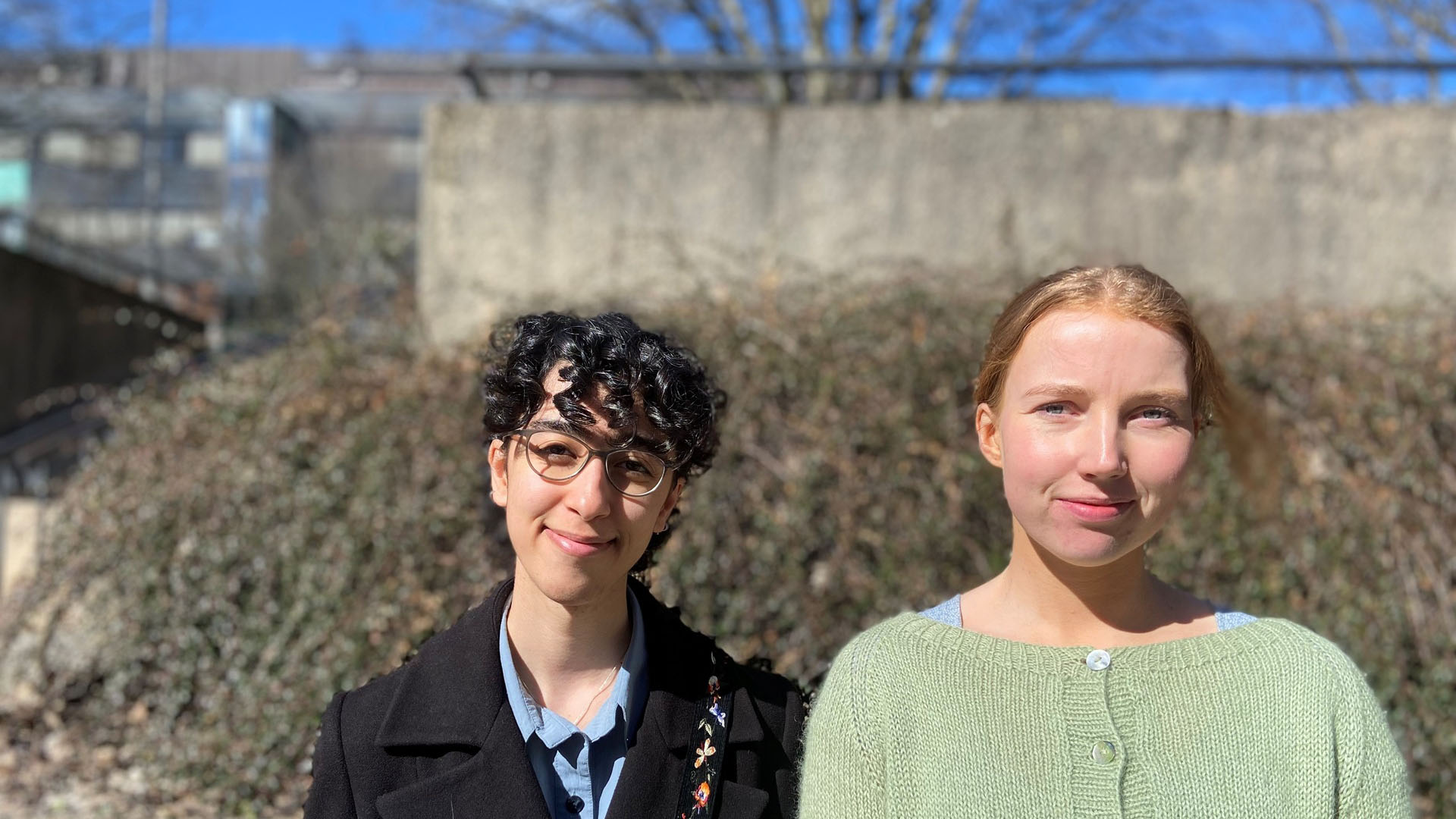
Medical student Julie Ytre-Eide and Master student in International Community Health Mina Karkhi have been learning assistants on the Honors Certificate Education for Sustainable Health. Researcher Tony Sandset is the teacher and responsible for the certificate. The learning assistants have developed case assignments that will be used in teaching in the fall semester of 2025.
- “Developing the syllabus gave me a deeper understanding of the pedagogical side of education,” says Mina, “but more importantly, it gave me a new perspective. “By seeing myself in the role of an educator, I began to look at the curriculum as a living structure, open to adaptation and innovation. I gained a new understanding of the thought and effort that was already behind it. Collaborating with a teacher helped turn our reflections into something concrete and useful."
An interactive approach
Julie talks about how she got the opportunity to shape the curriculum. She describes the process as both educational and rewarding, and emphasizes the importance of creating interactive solutions that engage students.
- “Learning is better when it's interactive,” she says. “Adding case assignments and problems that invite reflection and discussion makes the learning program more engaging and realistic,” she explains.
Julie emphasizes how this creative work provides insight into educational planning.
- “As a doctor, it's important to be able to communicate complex medical concepts to patients, relatives and colleagues in a good way. Creating assignments and thinking about how to make learning interactive and engaging has given me tools and awareness of communication,” says Julie.
An unique insight
Julie goes on to talk about how the students can contribute with a perspective that may not be as obvious to experienced teachers. She highlights how students can develop solutions that a professor might not have thought of. This type of participation gives students responsibility for their own learning, which can increase engagement and motivation.
Mina, on the other hand, highlighted reflections on learning.
- “The role of contributor rather than recipient of information made me reflect on how learning happens and what I value in a teaching situation. For example, how to be clear without oversimplifying, how to leave room for reflection and give confidence to students as active participants. The role as a contributor also made me more interested in different teaching methods; what makes them accessible, inclusive and thought-provoking.
The future of education: Interdisciplinary collaborations
Seeing the importance of the students' role as co-developers in academic programs, it becomes clear that the future of education must be built on interdisciplinary collaboration. Systems thinking, self-reflection and future thinking are essential components in this development process.
As Julie points out, the involvement of students in learning processes provides valuable experiences that can inspire them to get involved in teaching and future working life. Mina agrees.
- “The students have so much valuable insight to contribute,” says Mina. “Since the curriculum is ultimately for the students, it makes sense to include them in its design. It's important to create opportunities for those who are interested, and to nurture that interest."
Hiring students as learning assistants is not only beneficial for developing a more inclusive learning environment, but it proves to be a powerful tool for critical thinking and democratic participation. This gives students a unique voice in shaping their own education, and a new way forward for higher education in Norway.
Teaching assistants at other faculties at UiO
LINK at UiO hosts the Network for learning assistant schemes. On their website there are a number of good learning resources related to this. The learning assistant role: EnhanceYourTeaching.