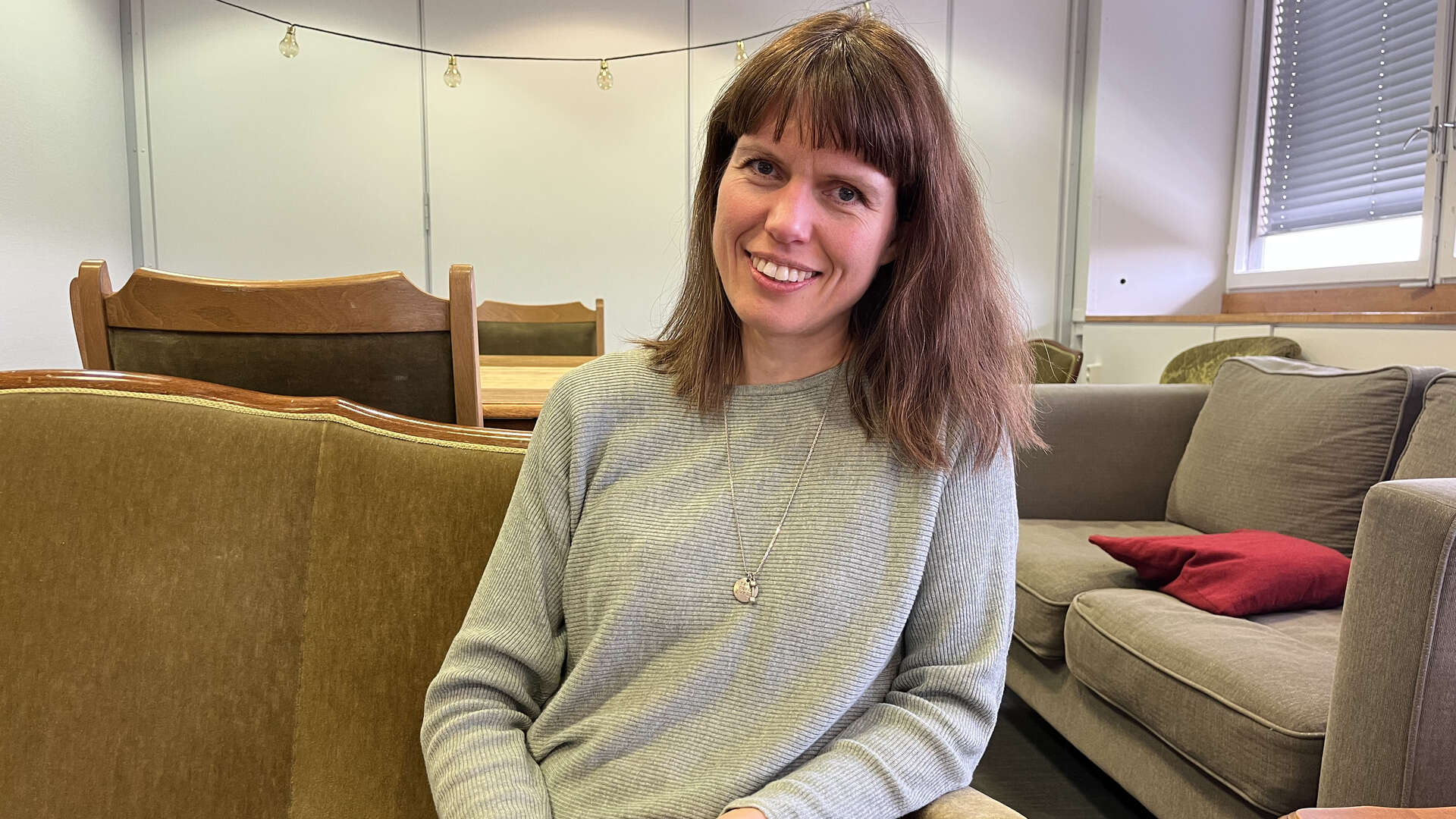
The Centre for Pandemics and One-health Research (P1H) aims to conduct a series of interviews, «P1H Coffee Break», with researchers to raise understanding and awareness regarding the field of pandemics and One-health.
How would you describe your research in three words?
Comprehensive – I wanted to create a comprehensive overview of religious vaccine skepticism as a phenomenon. In addition, my material was in itself quite comprehensive.
My project consisted of three parts. First, I reviewed previous research with the aim of creating an overview of what is known about various types of religious vaccine skepticism. Second, I examined the non-medical exemptions to school/childcare immunization mandates in all 50 U.S. states (plus the District of Columbia) to see how they treat «religion». Lastly, I conducted four case studies to analyze how secular and religious arguments are used by vaccine critics in the United States. Three case studies involved litigation, and one focused on an educational booklet aimed at Haredi mothers, a sector of Orthodox Judaism.
Interesting – I was never bored when I worked on this project. I learned a lot about immunization policies (strategies, benefits, challenges), religious beliefs and concerns about health and disease prevention, and the interaction between religion and politics in the United States.
Relevant – Immunization in general, and childhood immunization (which was my main focus) in particular, are important health measures, usually recognized as great benefits, yet sometimes met with skepticism and rejection. Understanding the role of religion can be beneficial to health care workers and policy makers, and it can also contribute to a more balanced and factual public debate.
What motivated you to do research on this topic?
I think it was primarily the opportunity to combine my dual background as a health care worker (nurse/ physiotherapist) and a scholar of religion. I started my project back in 2017, a few years before the covid-19 pandemic and before there was an increased focus on how religion may influence people’s vaccine decisions. Back then, it was sort of a «fringe» topic. Then came 2020, and it suddenly became very relevant in a different way.
Disease prevention and immunization are important topics, and it is of course more meaningful to contribute knowledge that is not only interesting but also useful.
What is the aim of the research?
The aim of my project was to find out more about the role of religion in vaccine decision-making. There are some prejudices out there that people only use religious arguments as excuses to avoid immunization requirements. So, I wanted to know what former research has found on the issue, and I wanted to create an overview of the different kinds of religious vaccine skepticism that exist.
The first part of my dissertation focused on: what do we actually know about religious vaccine skepticism? Based on a literature review, I developed a typology of five main types, aiming to highlight the distinct qualities of the various religious objections to vaccination:
(1) a worldview clash type, in which vaccines do not make sense as a health intervention;
(2) a divine will type, representing a form of passive fatalism;
(3) an immorality type, deeming some vaccines unethical due to their production or effect;
(4) an impurity type, pointing to ingredients that will defile the body;
(5) a conspiracy type, where a vaccine plot is targeting a religious group.
I also wanted to explore how religious vaccine skepticism interacts with childhood immunization mandates. For this part, I looked at the United States, where all 50 states require children to be vaccinated against at least some diseases before they can attend school or childcare. Most states allow for religious exemptions, and some also accept personal belief exemptions. So, this makes the United States a fruitful context for studying the religious arguments of parents. For instance in lawsuits, if their children have been denied a non-medical exemption.
So, I looked at how religious and secular objections to vaccination have impacted the landscape of mandatory childhood immunization policies in the United States, and how parents and other vaccine-critical actors have responded to such legislation. My review of the states’ non-medical exemption clauses showed how the initial substantial influence by Christian Scientists has largely been replaced with more neutral religious exemptions, although elements of the original criteria still exist in some states’ clauses as a linguistic remnant.
My four American case studies showed how parents still use litigation, among other measures, to secure the right to refuse vaccinating their children, and that religious objections cannot always be separated from secular arguments.
Why is this topic important?
The topic is important because it deals with major health decisions that most parents have to make. For health care workers and policy makers, it can be important to better understand the reasons why some parents are skeptical about immunization or reject it all together. Most parents just want to do what is best for their children, and prejudices and lack of understanding can hamper dialogue and alienate parents from the health care system.
How are studies on pandemics of One-Health related to your field of research?
In the study of religion, we may examine practically any aspect of religion. Religion has always played and still plays an important role in many people’s lives. It may influence their daily routines and decisions; their attitudes towards health, disease, and death; their responses to disasters and difficulties; their diet; their acceptance of medication; and so on. So, the study of religion can contribute relevant knowledge, such as contextualization and in-depth explanations of religiously motivated arguments and responses (e.g., to pandemics, immunization campaigns, sanitary measures, etc.).
Thank you to Hanne for participating in this interview. Check out our Instagram at @pandemicscentre.uio to see snippets of the interview.