The prize is awarded by the International Society for Stem Cell Research (ISSCR). Its Public Service Award for 2026 has been given to two international networks of stem cell core facilities, Stem Cell COREdinates and CorEUstem.
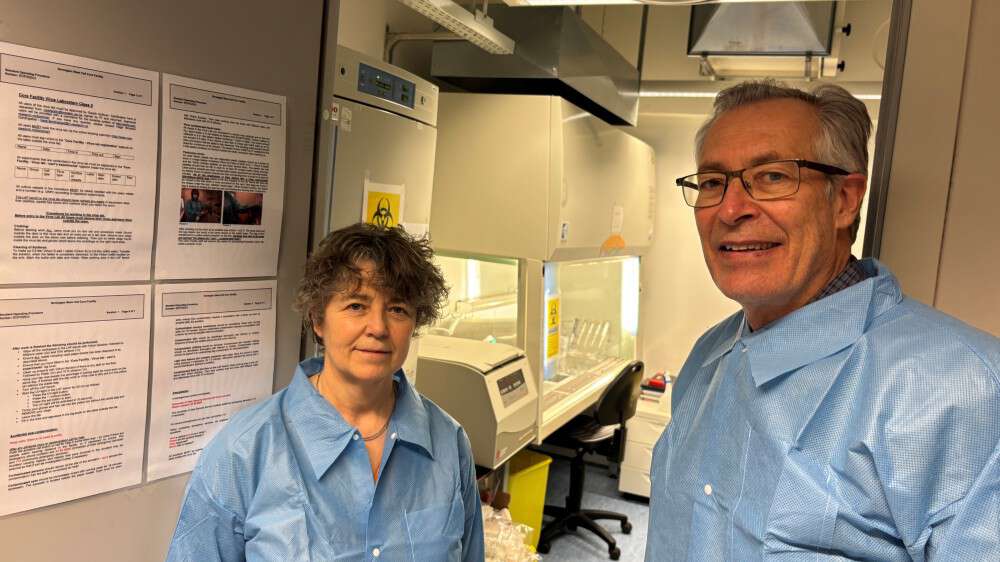
Norwegian Core Facility for Human Pluripotent Stem Cells, located at Domus Medica at UiO and at Epigen at Ahus, represents Norway in both of these networks. General manager Hege Brincker Fjerdingstad and professor Joel Glover at IMB play key roles there.
“It was great to receive this news. It’s really encouraging to be appreciated internationally,” says Brincker Fjerdingstad.
“The prize means a lot. A great deal of work goes into what we do both here in Norway and in these international networks,” says Glover.
Implementing dynamic donor consent
The prize is awarded for the networks’ efforts to promote global collaboration, harmonisation of technical standards, and access to methods, expertise and data in stem cell science.
“Among other things, we have spent a lot of time developing a platform for “dynamic consent” from donors. This is important because the stem cells they have donated can potentially be used in the future for applications that do not yet exist, and are hard to predict,” Glover explains.
Reprogramming somatic cells into stem cells for many different applications
The core facility reprograms differentiated somatic cells, such as skin cells or blood cells, into so-called iPS cell lines. iPS stands for induced pluripotent stem cells. The cells are reprogrammed in the laboratory to become stem cells that can be differentiated into any cell type in the body. These can then be used to repair diseased or damaged tissue, study disease mechanisms and test new medicines.
Fjerdingstad praises the excellent collaboration they have with core facilities in many other countries, pointing out that it is characterised by a strong spirit of cooperation and sharing, with little competition.
The goal is to be able to treat patients
The networks have also been spearheading efforts to make stem cells available for clinical use, so that they can eventually be used to treat many different diseases. In this connection, the Core Facility is now establishing clinical iPS cell biobanks in collaboration with the Ex vivo Cell Laboratory and the Norwegian Bone Marrow Donor Registry at Oslo University Hospital (OUS).
The biobanks will be able to meet the need for cell therapy for a large proportion of the Norwegian and Scandinavian population, as well as elsewhere in Europe and the USA.
Early movers in the Nordic countries
The Norwegian Core Facility for Human Pluripotent Stem Cells was established in 2009 as the first of its kind in the Nordic region.
It serves as a core facility for UiO, OUS and Akershus University Hospital (Ahus). It has one node at Domus Medica and one at Ahus.