Individuals with psychotic disorders have high levels of cardiometabolic disease, such as cardiovascular diseases and type 2 diabetes. What role do genes play in the development of these diseases? And is it possible to predict the best treatment path for each individual?
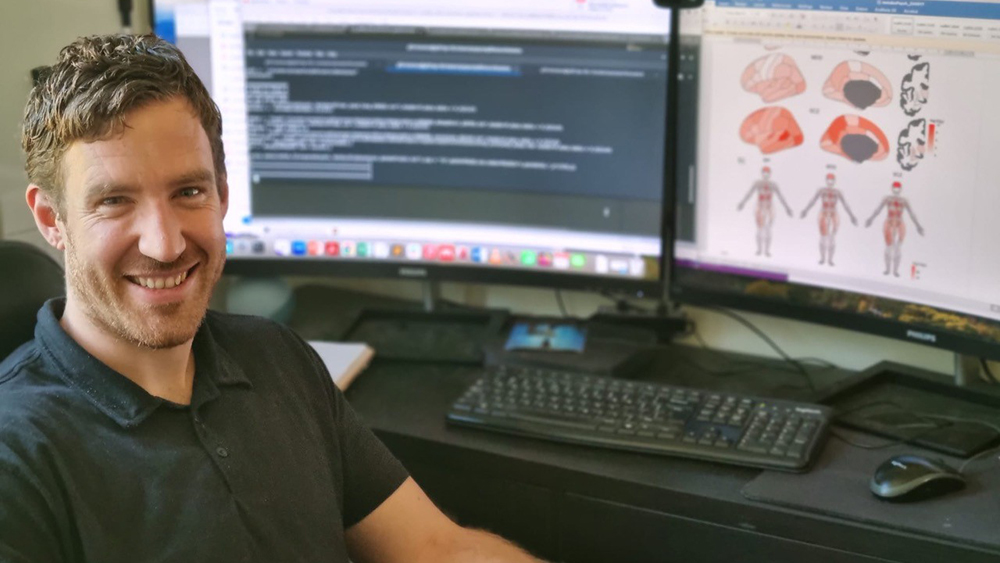
These are the questions postdoctoral researcher Dennis van der Meer and his colleagues are exploring. They have now been awarded 8 million NOK from the Research Council of Norway's FRIPRO program, in the category of Research Project for Young Talents.
“I am very happy to have received this grant and I am excited to move this research forward,” he says.
Largest global burden of disease
Each year, the global burden of disease is calculated. The list show how different diseases, injuries, and risk factors affects populations in terms of disability and mortality.
“Mental disorders and cardiometabolic diseases rank first and second in global burden of disease,” van der Meer explains.
“People with psychotic disorders have high levels of cardiometabolic disease. This is a strong determinant of their clinical outcome and life expectancy,” he says.
What is the relationship between psychosis and cardiometabolic diseases?
Van der Meer’s project aims to understand the relationship between psychosis and cardiometabolic diseases. Why do some people develop both conditions?
“We believe that a range of molecules in the blood that capture a person’s metabolic health, such as cholesterol, can explain this relationship, and also help us to predict the clinical outcomes of individuals with psychosis,” he explains.
What Role Do Genes Play?
To explore the connection, researchers will use big data from large Norwegian and international population samples.
In these data, they will examine genetics, blood samples and MRI scans of the body and the brain. The dataset totals over one million individuals.
“Using statistical techniques developed at our department, we will use information about individual’s genetics and these molecules in their blood to estimate cause and effect between mental health and metabolic health,” van der Meer explains.
“We will also develop a new approach to predict when someone may develop psychosis by applying machine learning to the collection of biological information,” he says.
New technological advancements
The researcher notes that there has been enormous technical development on the front of 'metabolomics' in recent years. Metabolomics is a technology that can provide an overview of thousands of small molecules from a blood sample, giving a unique snapshot of the patient's health.
This development has provided van der Meer and his colleagues with a unique opportunity to conduct this project.
“It is now possible to extract accurate information about the concentration of hundreds of blood markers from blood samples. This technique has now become available for these big cohorts that we have unique access to here at UiO,” he explains.
Can the best treatment path be predicted for each individual?
Through new statistical methods and this novel combination of genetic and metabolic information, the researchers build towards more “personalized” medicine.
“Our goal is to achieve more accurate, personalized medicine, which provides estimates based on an individual's biological background. The identified biological pathways may thereby help to develop more effective treatments,” says the postdoctoral researcher.
The aim is to predict the best treatment path for each individual patient.
About FRIPRO
The purpose of the FRIPRO programme is to fund curiosity-driven and bold research that can contribute to advancing the state-of-the-art. FRIPRO is for particularly talented researchers in their fields, and getting funded is tough.
The call Researcher Project for Early Career Scientists is aimed at researchers at an early stage in their careers, 2-7 years' experience after receiving their PhD, who have demonstrated the potential to conduct research of high scientific quality.