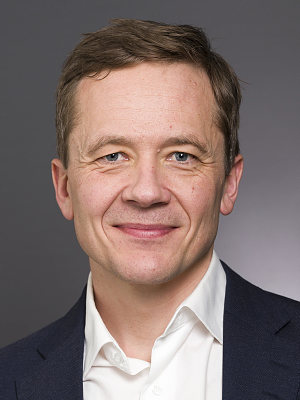
I hold an MD from NTNU (2007) and a PhD from the University of Oslo (2015). Since 2024 I have been Professor of Clinical Epidemiology and Management at the Institute of Health and Society, and since 2023 Pro-Dean of Studies at the Faculty of Medicine. I am also a researcher at the Department of Transplantation Medicine, Oslo University Hospital. In 2013–14 I was a Fulbright Scholar at the Harvard School of Public Health in Boston.
Research
My research concerns how well diagnostic and therapeutic interventions in health care actually work – and what they cost us, both in money and in unintended consequences for patients.
Screening and early detection. Much of my work concerns colorectal cancer screening. I have been part of the large randomised trials NORCCAP and NordICC, which have followed participants for more than 20 years and provide some of the most robust estimates available of what sigmoidoscopy and colonoscopy screening mean for colorectal cancer incidence and mortality. I have also worked on the benefits and harms of mammography screening, and on the question underlying all screening: how much lifetime does the population actually gain, and who pays the price in overdiagnosis and unnecessary treatment?
Surveillance after polyp removal. Every year, many thousands of people are told that a polyp was found and that they should return for follow-up. I have studied who is genuinely at increased risk after such a finding, how that risk depends on the characteristics of the polyp and on the quality of the examination performed, and how often surveillance should be repeated. The aim is to distinguish those who need close follow-up from the large majority who do not.
Artificial intelligence in endoscopy. With international collaborators I have studied what AI-based systems for polyp detection and optical diagnosis do to the quality of colonoscopy – and what they do to costs, workload and carbon footprint when adopted at scale.
Bowel disease, gut microbiota and cancer risk. I work on cancer risk in patients with inflammatory bowel disease using large Nordic registry cohorts, and on faecal microbiota transplantation as treatment for Clostridioides difficile infection.
Wider clinical epidemiology. An interest in methodology has taken me into several fields beyond gastroenterology: circulatory failure after out-of-hospital cardiac arrest, survival after surgery for uterine sarcoma, and mortality and transmission during the COVID-19 pandemic in Norway and Sweden.
Methodological development. Running through all of this is an interest in the practical application of research methodology: how randomised trials can be used to validate and develop observational study designs, how to handle interval-censored data and competing risks, and not least how results should be presented so that they can actually inform decisions.
Innovation and minimally invasive procedures
A large and growing part of my work is the development and evaluation of new medical methods and medical devices for minimally invasive procedures. The idea is simple: much of what today requires surgery could be done endoscopically, with less burden for the patient and lower cost for the health service – but only if the devices exist, and only if their effectiveness is documented.
I lead or take part in several projects in this area: endoscopic resection for early colorectal cancer, a new stent solution for treatment in the gastrointestinal tract, and endoscopic treatment of obesity. I have also worked on more immediate clinical questions of technique and equipment – polypectomy method, colonoscope design, analgesia during colonoscopy, and endoscopic access in patients who have undergone bariatric surgery.
This work is done together with clinicians, engineers and industry, and runs from idea and prototype through clinical testing to documented effect. It is some of the most rewarding work I do: the distance from a good idea to a patient spared a procedure is remarkably short.
Teaching and educational leadership
I have taught at the University of Oslo since 2015, on the bachelor's and master's programmes in health management and health economics and on the medical programme. From 2016 to 2019 I led the course in knowledge management, leadership and quality improvement, and from 2018 to 2022 I was Head of Education for the medical programme at the Institute of Health and Society. Since 2023 I have been Programme Director for the medical programme and chair of its programme council.
I have led and contributed to several projects revising and establishing study programmes: the bachelor's programme in health management and health economics at UiO, decentralised medical education at UiO (Campus Sør), and the health management programme at the University of Bergen. I supervise PhD candidates and master's students.
Committees and public engagement
I have served on numerous councils and committees in education and research, and have been an elected member of the Faculty Board at the Faculty of Medicine and a deputy member of the University Board. Since 2021 I have chaired the council that evaluates the introduction of new clinical methods and equipment at Oslo University Hospital.
Research is of little use if it stays in the journals. I lecture regularly for health professionals and the general public, write opinion and debate pieces on medical topics, and serve as an editorial consultant for the Journal of the Norwegian Medical Association.