2027 SUMO symposium, 8 - 10 February.
Topics: Embryo models, placenta biology, germline development, stem cell based embryo models, etichs and governance, enabeling technologies.
More information and registration
Deadline Early bird registration: 31.10.26.
Company exhibition stand.
A designated area outside the conference auditorium will be available for company exhibition desks.
More information and registration.
Keynote speakers:
Alejandro Aguilera Castrejon, Howard Hughes Medical Institute, Virginia, US.

Alejandro Aguilera obtained a bachelor’s degree in biology at the National Autonomous University of Mexico. Afterwards, he moved to Israel where he obtained his M.Sc. and PhD degrees at the Weizmann Institute of Science, working in the laboratory of Prof. Jacob Hanna. During this his graduate studies, Alejandro focused on devising long-term ex utero culture platforms for mouse embryos and stem cell embryo models. Directly after his PhD, Alejandro established his own lab at the Howard Hughes Medical Institute Janelia Research Campus, where he is a group leader since March 2024. The Aguilera lab is focused on engineering new systems for ex utero culture of natural and stem cell-derived mouse embryos, harnessing these platforms for interrogating and controlling the processes regulating early mammalian morphogenesis.
Alfonso Martinez Arias, Universitat Pompeu Fabra, Spain.
Alfonso Martinez Arias is currently ICREA Research Professor at the Universitat Pompeu Fabra in Barcelona. He obtained a PhD from the University of Chicago (1983) and after 40 years in the University of Cambridge (UK) In 2021 he moved to Barcelona. Currently his work is at the interface between stem cell, developmental and systems biology.
Anna Bigas, Josep Carreras Leukaemia Research Institute, Spain

Anna Bigas, PhD, is group Leader at Hospital del Mar Research Institute and Josep Carreras Leukemia Research Institute, Barcelona, Spain. PhD in Cell Biology from University of Barcelona and postdoctoral training at the Fred Hutchinson Cancer Research Center, Seattle. Her research focuses on hematopoietic stem cell biology, Notch signaling, and leukemia, particularly interested in hematopoietic stem cell specification and mechanisms of chemotherapy resistance.
Anna Osnato, Institute of Molecular Biotechnology (IMBA), Vienna, Austria.

Anna earned her PhD in Stem Cell Biology from the University of Cambridge and is currently a MSCA Fellow in the lab of Nicolas Rivron at IMBA. Her research uses blastoids to dissect the genetic regulation of human embryo implantation and placental development during the earliest stages of pregnancy.
Erik Vrij, Maastricht University, The Netherlands.

Erik Vrij leads the Reproductive Bioengineering lab at Maastricht University’s GROW Research Institute, working closely with the MERLN Institute. His lab develops embryo models, monochorionic twin models and implantation-on-chip platforms to study how embryonic and maternal tissues develop and interact, with the aim of advancing regenerative medicine, assisted reproduction and diagnostics.
Gendie Lash, Guangzhou Medical University, China.

Gendie Lash is a Principal Investigator at the Guangzhou Women and Children’s Medical Center, Guangzhou, China. Her research program utilizes primary isolates of cells (from decidua and placenta) from the first trimester of pregnancy to investigate remodelling of the uterine spiral arteries and trophoblast differentiation, and how failures in these processes impact women’s reproductive health.
Giuliana Rossi, Roche, Basel, Switzerland.
Iftach Nachman, Tel Aviv University, Israel.

Ivan Bedzhov, Max Planck Institute for Molecular Biomedicine, Münster, Germany.
Ivan Bedzhov completed his undergraduate studies at the University of Sofia, Bulgaria, and obtained his PhD from the Max Planck Institute for Immunobiology and Epigenetics. He subsequently conducted his postdoctoral research at the Gurdon Institute, University of Cambridge, before establishing his own research group at the Max Planck Institute for Molecular Biomedicine.
Jesse Veenvliet, Max Planck Institute of Molecular Cell Biology and Genetics (MPI-CBG), Dresden, Germany.
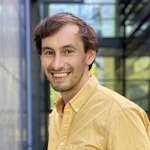
Kristina Haase, EMBL Barcelona, Spain.
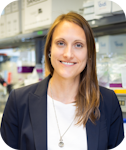
Dr Kristina Haase is an ERC-funded Group Leader at EMBL Barcelona whose research has established advanced human microvascular models to study tissue-specific vascular function, sex differences and maternal–fetal biology. As Principal Investigator of Model‑MI BioStudio project at the BioInnovation Institute, she is translating a vascularized placenta model into a commercially relevant platform.
Marta Shahbazi, MRC Laboratory of Molecular Biology, Cambridge, UK.

Marta Shahbazi is a Group Leader at the MRC Laboratory of Molecular Biology (LMB). Her research focuses on how cells make fate decisions during early human development and how these decisions change when errors occur. She developed a method to culture human embryos beyond implantation in vitro, which opened new opportunities to study human embryonic development and tissue morphogenesis. Her current research combines human embryos, stem cell models and organoids to understand how cells respond to developmental errors and determine the fate of abnormal cells. Marta obtained her PhD from the Spanish National Cancer Research Centre (CNIO) in 2013 and subsequently carried out postdoctoral research at the University of Cambridge before joining the LMB in 2020.
Peter Rugg-Gunn, Babraham Institute, Cambridge, UK.

Peter Rugg-Gunn is a senior group leader at the Babraham Institute in Cambridge. His research interests centre on understanding how the epigenome is established during human development and how this affects cell fate decisions in human embryos and in stem cell-based embryo models.
Stephen Renaud, Western University, Ontario, Kingston, Canada.
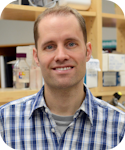
Dr. Stephen Renaud is an Associate Professor at Western University in London, Canada, whose research focuses on placental development and its role in fetal and infant health, using cell and animal models to investigate trophoblast formation and function. His work also examines how environmental stressors linked to deficient placentation alter trophoblast biology and contribute to adverse pregnancy outcomes.
Tina Buerki-Thurnherr, Swiss Fed. Lab. for Materials Science and Technology (Empa) Switzerland.

Dr. Tina Buerki-Thurnherr leads the Particles@Barriers group at Empa, focusing on interactions of nanomaterials and therapeutics with the maternal-fetal interface. Using complementary placental models ranging from co-culture systems and ex vivo perfusion to next-generation microphysiological platforms, her research seeks to improve developmental safety assessment and maternal-fetal health protection.
Contact and support:
Organizing committee:
Jesse Veenvliet (M. Plank Institute).
Andre Dias (NIMSB).
Iftach Nachman (TAU)
Ludivine Delon (U. Oslo).
Igor Meszka (U. Oslo)
Stefan Krauss (U. Oslo).