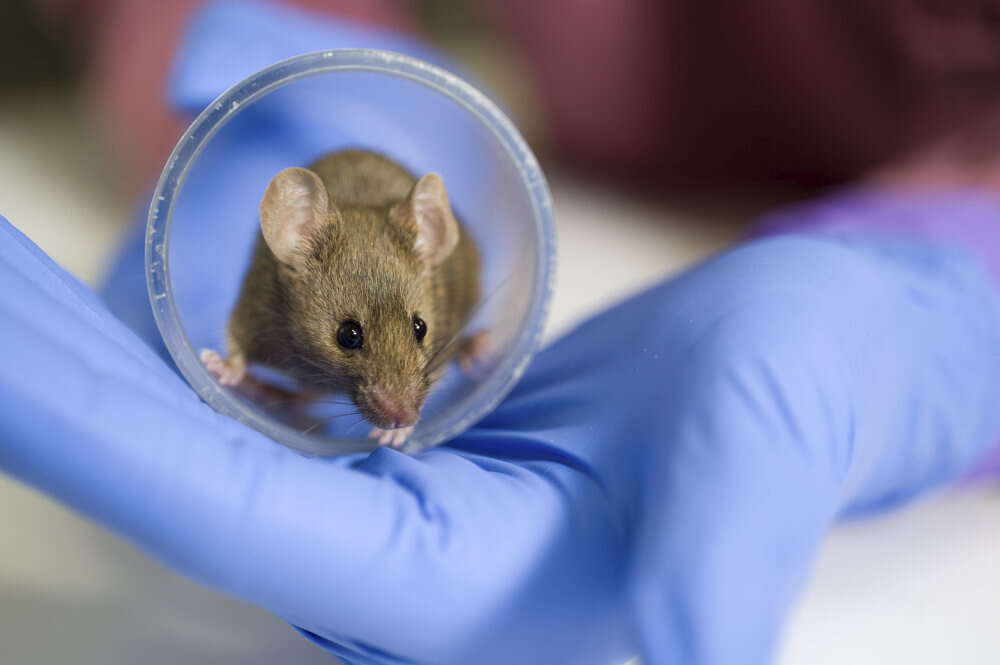
Why tunnel handling?
The way mice are handled significantly impacts both animal welfare and research quality. Handling can induce stress, which may alter both the behavioral and physiological responses of the animals.
Research indicates that traditional handling—lifting mice by the tail—can increase anxiety and reduce their willingness to approach humans. This can introduce unwanted variability in experimental results and consequently affect the number of animals required for studies. Conversely, studies demonstrate that tunnel handling significantly reduces stress and anxiety. Specifically, mice handled using a tunnel:
- Show a greater willingness to approach and interact with the handler.
- Exhibit lower anxiety levels in standardized tests.
- Habituate to handling more effectively over time.
This effect is documented regardless of whether the tunnel is new or familiar to the animal, although a familiar tunnel within the home cage can provide an additional positive effect. Based on this evidence, we have implemented tunnel handling as our standard method.
How does it work in practice?
Tunnel handling involves lifting the mouse using a transparent plastic tube. The tunnel is a permanent fixture in the cage, allowing the mouse to become familiar with it. Typically, the mouse will willingly enter the tube on its own. The tunnel is then lifted with the mouse inside. If necessary, the mouse can be gently guided into the tunnel.
This method minimizes direct physical handling and provides the animal with a greater sense of control over the situation. Additionally, the transparency of the tunnel makes it easy to visually assess the animal's health.
Knowledge base
The implementation of tunnel handling is grounded in a solid research foundation. Studies show that:
- Tunnel handling reduces anxiety compared to tail handling.
- Mice maintain or increase their willingness to approach the handler when a tunnel is used.
- Repeated tunnel handling facilitates better habituation, whereas tail handling can sustain or amplify stress responses.
- Reduced stress can contribute to more stable and reliable research results.
Research also indicates that minimizing animal stress can reduce unwanted variability in studies, thereby promoting better resource utilization and a reduction in the overall number of animals used over time.
Alternative method: Handling with open hands (cup handling)
In certain cases, alternative handling methods may be required. If tunnel handling is not suitable for a specific experiment, handling with open hands (known as cup handling) can be a viable alternative.
During cup handling, the mouse is lifted by allowing it to move freely over the handler's hands without being grabbed or restrained. Research demonstrates that this method also induces lower stress levels and elicits a more positive response in mice compared to traditional tail handling.
Training and guidance
We offer guidance in both tunnel and cup handling for the department's users. Upon request, we can demonstrate these techniques and assist with their safe and correct implementation in your project. Our goal is to establish a common practice that safeguards both animal welfare and research quality.
Watch video guidance on tunnel handling of mice (NC3Rs)
References
- Hurst JL, West RS (2010). Taming anxiety in laboratory mice. Nat Methods. Oct;7(10):825-6.
- Gouveia K, Hurst JL (2013). Reducing Mouse Anxiety during Handling: Effect of Experience with Handling Tunnels. PLoS ONE 8(6): e66401.
- Gouveia, K., Hurst, J. L. (2019). Improving the practicality of using non-aversive handling methods to reduce background stress and anxiety in laboratory mice. Scientific Reports. 9 (1), 20305.