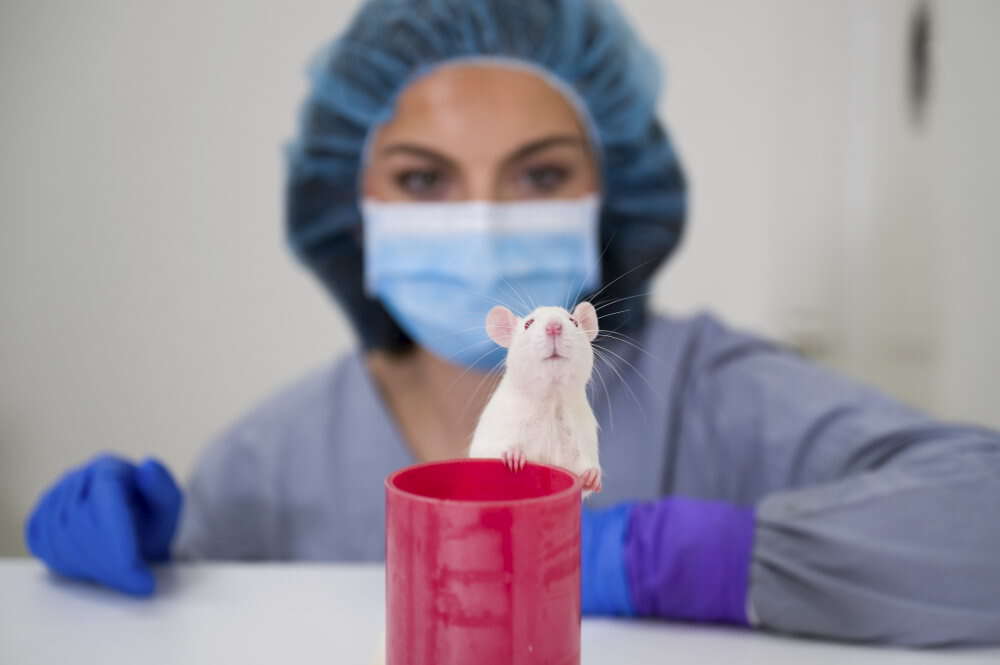
Animal welfare is the foundation of good research
Every year, thousands of people in Norway are affected by serious illnesses such as cancer or dementia. Our researchers work every day to find new ways to prevent or treat these diseases.
In many cases, research can be conducted on cells using advanced technology or data analysis. This is always our first choice. Modern technology has advanced significantly over the past decade, yet we still reach points where it is necessary to understand how a disease or treatment works within a complete organism, and how bodily processes interconnect. In these instances, researchers must rely on animal models.
Good animal welfare is crucial for research. If the animals are not thriving, it can compromise experimental results. Therefore, our guiding principle is simple: animal experiments are not permitted if the same knowledge can be obtained by other means. We consistently use the minimum number of animals necessary, and all experiments must prioritise the best possible welfare for the animals.
How we ensure animal welfare
The facility primarily houses mice, rats and occasionally fish. Ensuring the daily well-being of our animals is our top priority, and we operate according to the following principles:
- Companionship and play: All animals receive daily supervision and care. They are provided with items to play with and challenge themselves within their cages-referred to as environmental enrichment. This ranges from running wheels and chewing sticks to nesting materials. These items are replaced regularly to ensure variety and stimulation.
- Social needs: Animals are housed together to provide companionship. Keeping an animal isolated requires a special permit from the Norwegian Food Safety Authority.
- Professional care: The department has a dedicated veterinary surgeon, and most staff members are trained animal technicians or veterinary students. Each animal room has a permanently assigned caregiver. This ensures that we know the animals well and can quickly detect any behavioral changes or special needs.
- Gentle handling: When moving mice, we utilise a method called tunnel handling. This involves training the mice to voluntarily enter a transparent tube at the bottom of the cage before being lifted. Rats are lifted with full body support, as they respond well to close contact.
- Proper environment: We maintain a quiet environment with minimal noise and customised lighting.
Legislation, ethics and oversight
The use of laboratory animals in Norway is strictly regulated and governed by comprehensive laws and guidelines. There are stringent requirements regarding the conduct of experiments and the treatment of the animals.
Researchers must adhere to an approved plan
Anyone conducting animal experiments must obtain permission from the Norwegian Food Safety Authority. In their application, researchers must document that they possess the legally required training for the specific species they will be working with. They must also submit a detailed experimental plan. Strict regulations dictate what is permissible, and all experiments must be executed precisely as outlined in the approved plan.
Close collaboration in the best interest of the animals
We maintain a close and structured collaboration with our research groups. We hold meetings to plan projects, clarify needs and ensure consistent monitoring of the animals throughout the study period. This dialogue enables the design of optimal experiments while comprehensively safeguarding animal welfare. Strong cooperation between researchers and department staff is a fundamental prerequisite for both high-quality research and animal safety.
We operate in accordance with the international "3Rs" principles:
- Replace: We continually seek methods that can replace the use of animals.
- Reduce: We design our research to utilise the fewest number of animals possible.
- Refine: We continuously improve our methodologies to ensure the best possible animal welfare.
Contact us
To maintain strict infection control and ensure a peaceful environment for the animals, the department is closed to visitors.
- Are you a researcher? Go to information for researchers
- Are you a student or a journalist? Please feel free to contact us at postmottak@medisin.uio.no.