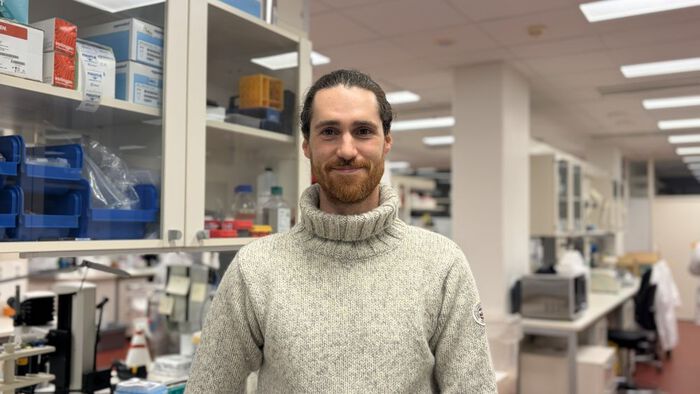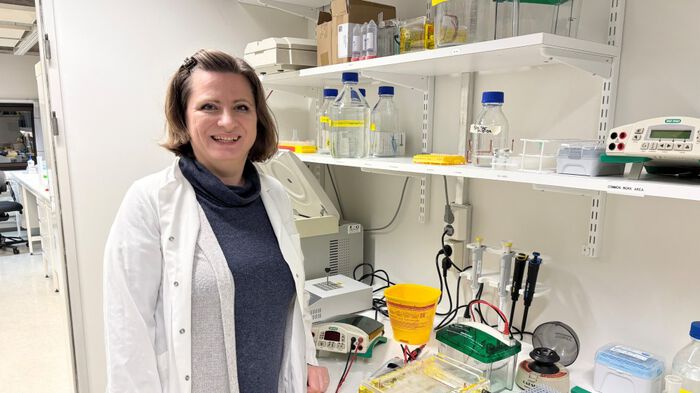
Professor Srdjan Djurovic aims to identify early blood-based biomarkers that can predict who is at increased risk of developing Alzheimer’s disease. The goal is to intervene before the brain sustains irreversible damage, and ultimately to prevent the disease from developing at all.
2025 - Page 2
Professor Anne Simonsen has been awarded NOK 12 million in FRIPRO funding from the Research Council of Norway to investigate how the breakdown of mitochondria influences the development of cancer.
The Nordic EMBL Partnership for Molecular Medicine has appointed Janna Saarela as its new Speaker, effective January 2026. Janna Saarela is the Director of the Norwegian Centre for Molecular Biosciences and Medicine (NCMBM) and succeeds Oliver Billker from the Laboratory for Molecular Infection Medicine Sweden (MIMS) in representing the Partnership internationally.
With 16 million kroner from the Olav Thon Foundation, professors Rune Enger and Koen Vervaeke will investigate ways of preventing or slowing the progress of Alzheimer’s disease.
Researcher Yanjiao Li at CRESCO aims to uncover why many embryos created through in vitro fertilisation (IVF) fail to develop, even when they appear normal at first glance.
Postdoctoral fellow Samuel J. Rodgers at CanCell has received FRIPRO funding from the Research Council of Norway for cancer research. “The project we are embarking on may have implications for patients in the long term,” he says.
He researches how healthcare professionals and patients make well informed decisions, and has developed a global system for rapidly updating evidence based treatment recommendations.
In the mechanical workshop at IMB they conjure up everything from tiny vascular clips to machines for lowering body temperature. They repair equipment when replacement parts no longer exist, and on one occasion they had to cut open a meat grinder to free the arm of a two-year-old child.
ELIXIR has announced the life science data resources selected in its latest evaluation round for ELIXIR Core Data Resources (CDRs) and ELIXIR Deposition Databases.
Among the six newly approved Core Data Resources is JASPAR, a long-standing and widely used database for transcription factor binding profiles, with the work behind the resource currently led by Anthony Mathelier, Associate Director and Group Leader of the Computational Biology & Gene Regulation group at the Norwegian Centre for Molecular Biosciences and Medicine (NCMBM).
Nikolina Sekulic is delighted to have been awarded FRIPRO funding to study the regions in fish that ensure chromosomes are correctly distributed during cell division.
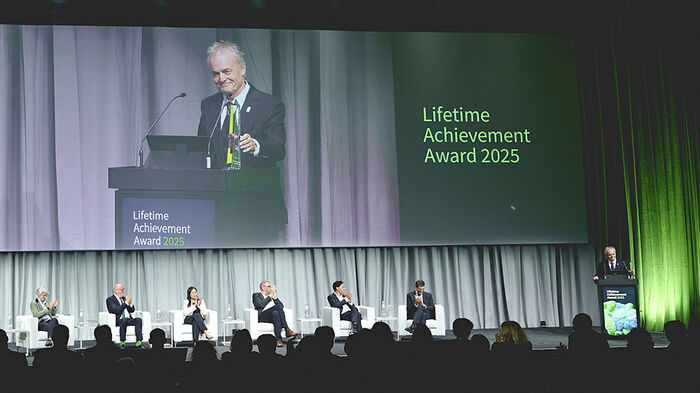
Professor Lars Aabakken has been honoured with the Lifetime Achievement Award at the United European Gastroenterology (UEG) congress for his pioneering contributions to endoscopy, international engagement and leadership in the field.
PRIMA’s Centre Director Karl-Johan Malmberg receive FRIPRO-funding from the Research council of Norway to enhance the therapeutic potential of NK cells for off-the-shelf cell therapy towards cancer.
The researchers are studying the role of mitophagy in cancer development and how NK cells and antibodies can be utilised in cancer treatment.
In the new convergence environment GENESIS, Professor Arne Klungland and colleagues will research the role of genes in the development of embryos. "We believe this is a unique project that will foster new collaborative environments in the Life Sciences Building," he states.
Anna Chaimani will work on novel statistical methods and software tools that will facilitate the production of more precise and up-to-date clinical guidelines for treatment and prevention of health diseases.
A new era for motif resources
The team behind JASPAR, led by Anthony Mathelier at NCMBM, has released the 11th update. JASPAR is built and maintained by an international consortium of research groups, making it a global effort to support the genomics research landscape for studying how genes are regulated.
The Faculty Board has adopted new regulations for the faculty's PhD education. The new regulations will come into force on January 1st 2026.
Andreassen receives the Colvin Prize for Outstanding Achievement in Mood Disorders Research for his groundbreaking research on bipolar disorder. "The award is a great recognition of our research environment, as many have contributed to the results we have achieved," the professor says.
23 projects have been granted funding to develop solutions to meet societal needs. We congratulate all the research groups!
Asbjørn Christophersen at the Institute of Basic Medical Sciences receives the award for his research on disease-specific T cells.
Inborn errors of immunity (IEIs) are a diverse group of more than 550 rare genetic disorders that disrupt how the immune system develops and functions. For patients, this can mean vulnerability to severe infections, autoimmunity, inflammatory diseases, or even cancer. Current treatment options are limited and often carry significant risks, leaving many families in search of safer and more precise therapies.
He is awarded the Ceppellini Prize for 2025 for his outstanding contributions to the understanding of the immunological mechanisms underlying coeliac disease.
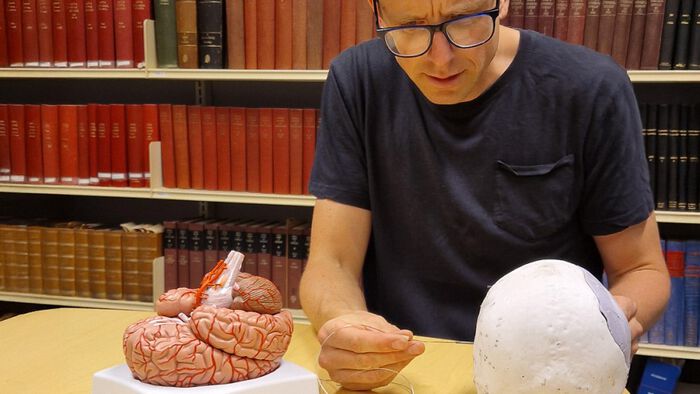
You are about to open a door. How does your brain decide whether to push or pull the door? Matthijs Dorst receives 10 million kroner in FRIPRO funding for research on this part of the brain.
What happens when the brain is no longer able to recreate memories of what happened, and where and when? Jørgen Afseth Sugar receives 22 million to research this topic.
A vibrant atmosphere filled the halls as researchers and students gathered for the annual IMB Science Fair. The event is an excellent platform for presenting and discussing the institute's latest research, and the day culminated with awards for two outstanding projects.